

Consider the Following:

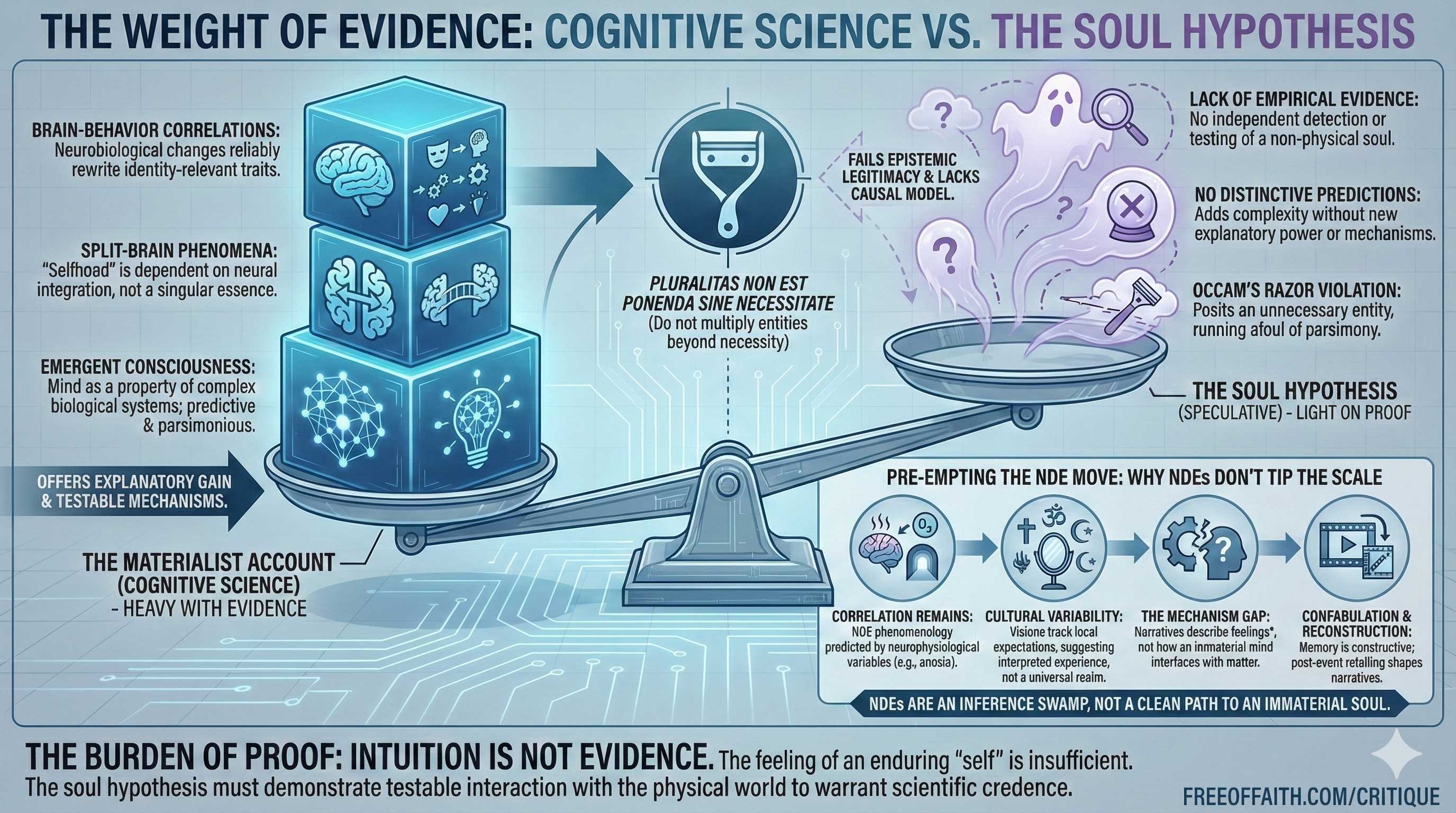
Summary: Modern cognitive science and philosophy overwhelmingly support the view that mental processes arise from the physical brain, with no evidence for an independent, non-physical spiritual soul. Phenomena such as brain-behavior correlation, split-brain studies, and emergent properties underscore the material basis of consciousness, rendering the soul hypothesis speculative and unnecessary.

Imagine someone asserting that humans possess a soul distinct from the body, with properties independent of physical processes. A famous early example of this was Dr. Duncan MacDougall’s claim that the human body loses 21 grams upon death, purportedly the weight of the soul. While this hypothesis captivated imaginations, it failed scientific scrutiny. The idea that the soul has measurable physical properties is now considered pseudoscience. However, the broader question remains: can philosophy and cognitive science offer any support for a non-physical spiritual soul?
Despite a persistent cultural belief in the soul as independent of the brain, the evidence from cognitive science consistently points to the physical nature of mental processes. Let’s critically examine this issue through the lens of modern research and philosophy.

Key Indicators From Neuroscience and Cognitive Science
- Brain-Behavior Correlation
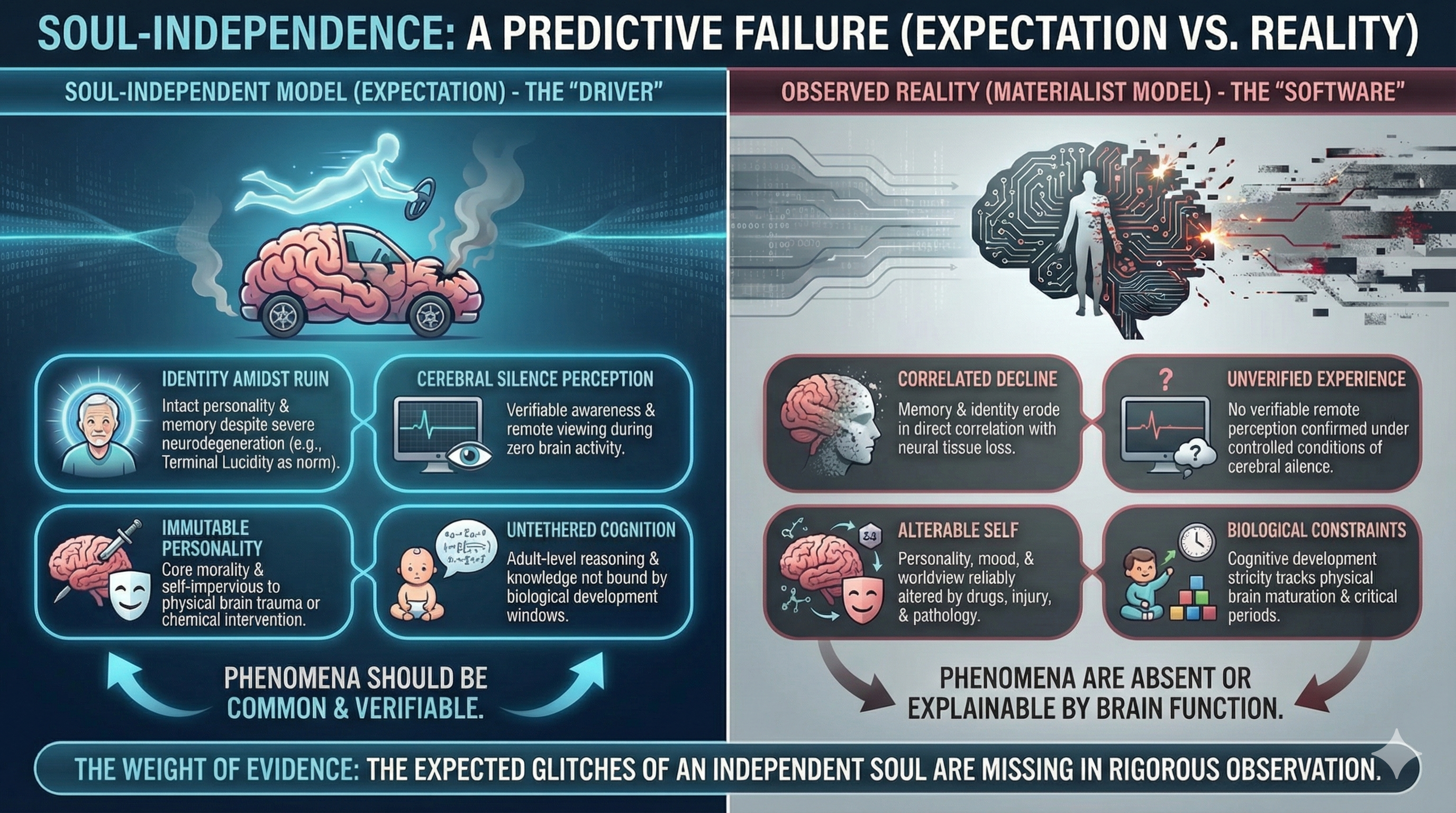
Cognitive science has revealed profound correlations between brain activity and mental functions. Techniques like fMRI and EEG allow scientists to map thoughts, emotions, and perceptions to specific brain regions. If a spiritual soul existed independently of the brain, we might expect evidence of mental functions continuing or arising without corresponding neural activity. However, no such phenomena have been observed. When the brain is damaged, mental capacities are impaired in predictable ways. For example:- Damage to the prefrontal cortex affects decision-making and personality.
- Lesions in the occipital lobe impair vision, even if the eyes are fully functional.
- These findings demonstrate that mental faculties are tightly bound to the brain’s physical structure.
- Split-Brain Studies
Research on individuals who have undergone a corpus callosotomy (splitting the brain’s hemispheres to treat severe epilepsy) reveals striking evidence against an independent soul. In these patients, each hemisphere can independently process information, leading to instances where one side of the brain seems unaware of the other. This raises a critical question: if there were a unitary soul, why would such dramatic dissociations occur? These phenomena are best explained by the brain’s physical organization rather than a singular, non-physical entity. - Emergent Properties
Philosophers and cognitive scientists often discuss the mind as an emergent property of the brain. Emergent properties are not reducible to their physical substrates but are wholly dependent on them. For instance, consciousness emerges from the complex interactions of neurons but cannot exist without the physical brain. This view undercuts the need for a spiritual explanation, as it accounts for both the subjective richness of experience and the material basis of mental life.
Philosophical Perspectives: Occam’s Razor and the Soul Hypothesis

From a philosophical standpoint, invoking a spiritual soul violates the principle of parsimony, commonly referred to as Occam’s Razor. This principle states that we should not multiply entities beyond necessity. If the brain’s physical mechanisms can fully explain mental phenomena, introducing a spiritual soul adds complexity without explanatory gain.
Further, the concept of a spiritual soul often lacks clear definitions. For instance:
- What mechanisms allow a soul to interact with the physical brain?
- How can a non-physical entity produce measurable effects on the physical world?
Without coherent answers, the hypothesis remains speculative and unfalsifiable.
Cognitive Bias and the Intuition of the Soul
Humans naturally perceive themselves as more than physical beings. This intuition is partly due to the Theory of Mind, a cognitive mechanism that allows us to attribute mental states to ourselves and others. While useful for understanding human behavior, this mechanism can also lead to dualistic thinking, where we see the mind as fundamentally separate from the body.
Additionally, our sense of continuity and selfhood creates the illusion of an enduring, independent soul. However, cognitive science suggests that this sense of self is a construct arising from the integration of sensory inputs, memories, and predictions by the brain. Neuroscientist Anil Seth refers to this as a “controlled hallucination,” wherein the brain constantly updates its model of the self based on incoming data.
Case Study: Near-Death Experiences (NDEs)
Proponents of the soul often cite near-death experiences (NDEs) as evidence for a spiritual realm. Common features include seeing a bright light, feeling detached from the body, and experiencing a sense of peace. However, research shows that these experiences can be explained by physical processes:
- Hypoxia (oxygen deprivation) affects brain activity and can produce hallucinations.
- The brain’s temporal lobe is associated with out-of-body sensations and mystical experiences.
NDEs are compelling from a subjective standpoint but offer no verifiable evidence for a spiritual soul.
Conclusion: Grounding the Self in Material Reality
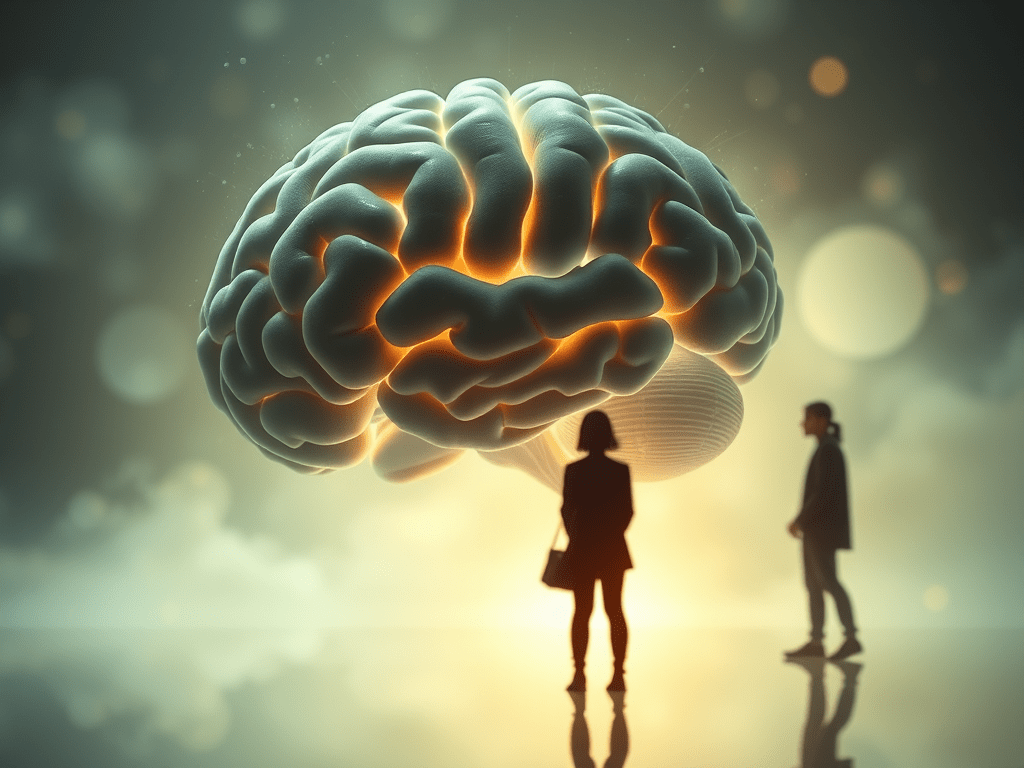
While the idea of a spiritual soul may appeal to intuition and tradition, cognitive science and philosophy provide a more grounded understanding of the self. Mental functions are tightly linked to the brain, with no evidence for independent spiritual processes. Philosophical parsimony, combined with advances in neuroscience, leaves little room for a non-physical soul.
The question of the soul ultimately reflects a broader human desire for meaning and transcendence. However, seeking answers in the spiritual realm without evidence risks intellectual stagnation. Instead, embracing the material basis of consciousness can deepen our appreciation for the complexity and beauty of the human mind. Let us anchor our inquiry in rigor and clarity, leaving behind unfalsifiable speculations.
See also:

The Logical Form
Argument 1: Brain-Behavior Correlation
- Premise 1: Mental faculties such as decision-making, vision, and personality are impaired when specific brain regions are damaged.
- Premise 2: If mental faculties were independent of the brain, damage to the brain would not consistently impair these functions.
- Conclusion: Mental faculties are dependent on the physical brain, providing no evidence for an independent spiritual soul.

Argument 2: Split-Brain Studies
- Premise 1: Patients with split brains exhibit independent processing in each hemisphere, sometimes leading to contradictory behaviors and perceptions.
- Premise 2: A unitary soul would imply unified awareness and consistent behavior, even when the brain is physically divided.
- Conclusion: The dissociations observed in split-brain patients are better explained by the brain’s physical structure than by the existence of a singular spiritual soul.
Argument 3: Emergent Properties
- Premise 1: Consciousness and subjective experience are emergent properties of complex neuronal interactions in the brain.
- Premise 2: Emergent properties, while not reducible to their substrates, are wholly dependent on them.
- Conclusion: Consciousness arises from the brain’s physical mechanisms, eliminating the need for a non-physical soul as an explanation.
Argument 4: Occam’s Razor
- Premise 1: The principle of parsimony suggests we should not introduce unnecessary entities to explain phenomena.
- Premise 2: Brain mechanisms fully account for mental processes without requiring a spiritual explanation.
- Conclusion: Invoking a spiritual soul adds unnecessary complexity, violating Occam’s Razor.
Argument 5: Cognitive Bias and Intuition
- Premise 1: Humans intuitively perceive themselves as more than physical beings due to cognitive mechanisms like Theory of Mind and a constructed sense of self.
- Premise 2: These intuitions are not reliable indicators of an independent spiritual soul, as they arise from the brain’s integration of sensory inputs and memories.
- Conclusion: The intuitive belief in a soul is a cognitive illusion, not evidence for its existence.
Argument 6: Near-Death Experiences (NDEs)
- Premise 1: Near-death experiences can be explained by physical phenomena such as hypoxia and activity in the temporal lobe.
- Premise 2: If NDEs were evidence of a spiritual soul, they would require phenomena that cannot be explained by physical brain processes.
- Conclusion: Near-death experiences do not provide evidence for a spiritual soul, as they can be fully accounted for by physical mechanisms.

(Scan to view post on mobile devices.)

A Dialogue
Examining the Evidence for a Non-Physical Soul
CHRIS: I believe that humans have a soul independent of the physical body, something spiritual and eternal. Doesn’t the complexity of human consciousness support this idea?
CLARUS: The complexity of consciousness is fascinating, but all available evidence ties it to the physical brain. For example, specific brain injuries consistently impair mental functions like decision-making, vision, or memory. If a spiritual soul operated independently, these impairments wouldn’t occur.
CHRIS: That could just mean the soul interacts with the brain. The brain might act like a receiver for the soul’s signals, which could explain the observed dependencies.
CLARUS: If that were true, we’d expect to find evidence of mental functions continuing when parts of the brain are damaged or inactive, but we don’t. Consider split-brain patients—when the corpus callosum is severed, each brain hemisphere operates independently, leading to contradictory behaviors. A unified soul wouldn’t produce such dissociations.
CHRIS: But couldn’t these split-brain behaviors still be explained by the soul adapting to the brain’s physical state?
CLARUS: That explanation isn’t necessary when the physical brain itself accounts for these behaviors. Philosophically, invoking a spiritual soul adds complexity without explanatory gain, which violates Occam’s Razor. Why assume a soul when the physical brain suffices?
CHRIS: Even so, I feel deeply that my soul exists. There’s a continuity to my sense of self that seems to transcend my body. Isn’t this subjective experience evidence?
CLARUS: What feels intuitive isn’t always true. Cognitive science shows that our sense of self is a construct—the brain integrates sensory inputs, memories, and predictions to create it. This constructed self can feel separate from the body, but it’s entirely rooted in the brain.
CHRIS: What about near-death experiences? People report vivid visions and sensations of detachment from their bodies. Doesn’t this suggest a spiritual realm?
CLARUS: Near-death experiences are compelling but can be explained by physical processes. For instance, hypoxia, or oxygen deprivation, can cause hallucinations, and the temporal lobe is linked to out-of-body sensations. These experiences don’t require a soul; they’re products of the brain under stress.
CHRIS: But isn’t it possible that a soul exists, even if the physical brain accounts for much of what we experience?
CLARUS: It’s always possible, but the question is whether it’s necessary or supported by evidence. If all observable phenomena about consciousness can be explained by the brain, positing a soul becomes an untestable and speculative addition, much like invoking invisible fairies to explain plant growth when we already understand photosynthesis.
CHRIS: That’s a challenging perspective, but I still hold on to my belief in a soul. Perhaps the evidence will one day reveal more.
CLARUS: That’s fair, but until then, our understanding must remain grounded in what we can observe and test. A spiritual soul might be a powerful idea, but without evidence, it’s no more credible than other unfalsifiable claims.
Notes:
Helpful Analogies
Analogy 1: The Broken Radio
Imagine a radio playing music. If the radio’s circuitry is damaged, the music becomes distorted or stops altogether. This doesn’t mean the music is coming from a spiritual realm; it simply reflects the radio’s physical condition. Similarly, damage to the brain leads to predictable impairments in mental functions, suggesting that consciousness arises from the brain itself rather than an independent soul.
Analogy 2: The Sunflower’s Movement

Sunflowers turn toward the sun throughout the day, a behavior that might have once been attributed to a spiritual force. Today, we know this movement is caused by physical mechanisms, such as cell growth on one side of the stem. In the same way, mental phenomena that seem mysterious at first—like the sense of self—can be explained by physical processes in the brain, without the need for a non-physical soul.
Analogy 3: The Economy as an Emergent Property
An economy emerges from the interactions of individuals, businesses, and resources. While it functions as an immaterial system, it cannot exist without its physical components. Similarly, consciousness is an emergent property of neuronal interactions in the brain. Just as we wouldn’t propose a spiritual economy, we don’t need to posit a spiritual soul to explain consciousness.
Addressing Theological Responses
Theological Responses
1. Response: The Soul as the Prime Mover of Consciousness
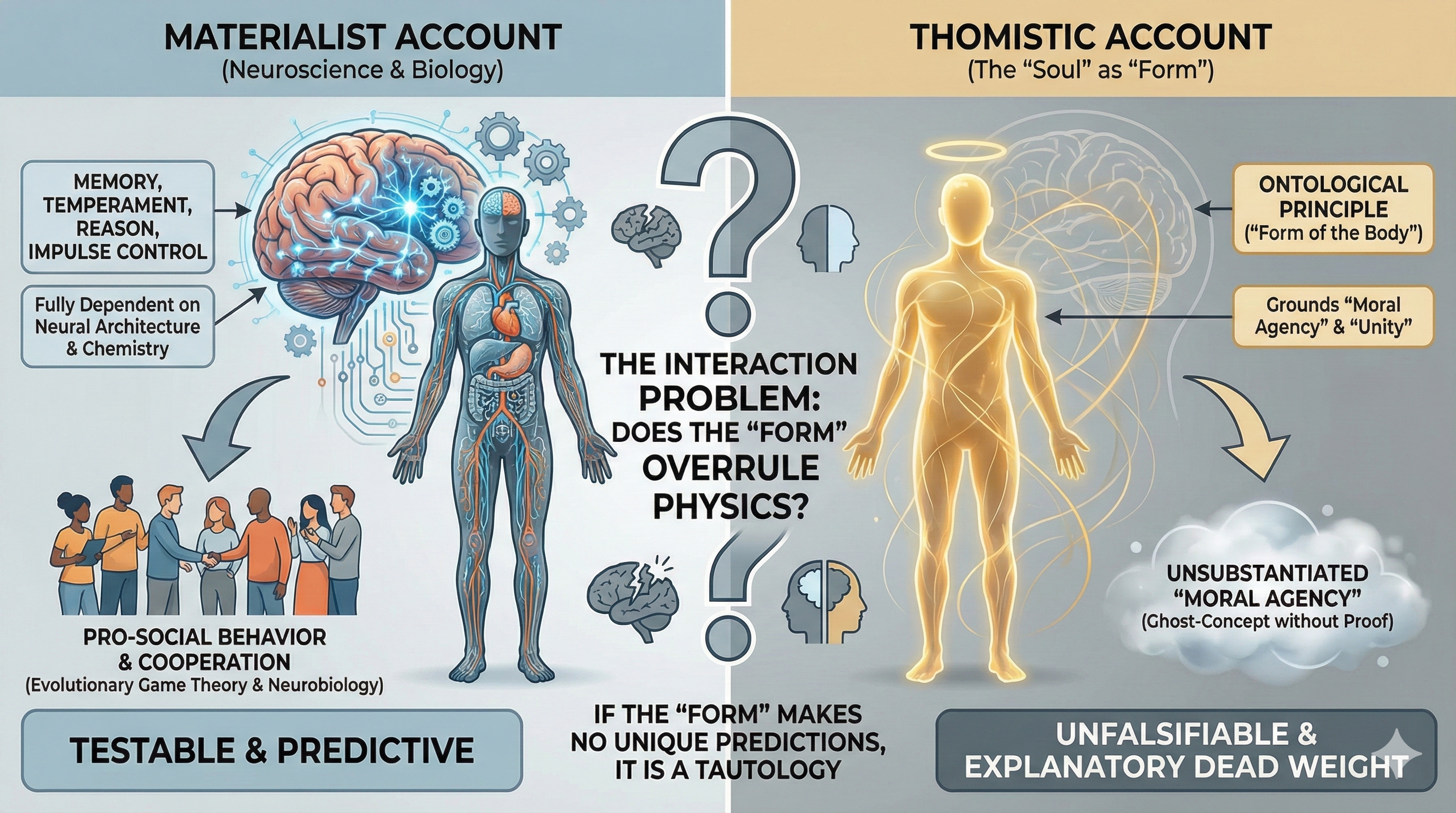
Theologians might argue that the soul is not merely a byproduct of brain activity but the prime mover of consciousness. While the brain facilitates certain functions, they could claim it acts as an instrument of the soul, much like a pianist uses a piano. The dissociation between physical impairments and the soul’s independence might, in this view, highlight the soul’s metaphysical nature rather than its absence.
2. Response: Intuition as Evidence of the Soul
Many theologians emphasize the strength of intuition and the universal human experience of a persistent, non-physical self. They might argue that this subjective continuity and the widespread belief in a spiritual essence cannot be dismissed merely as cognitive illusions. Instead, they could propose that these experiences point to a reality beyond what physical science can measure.
3. Response: Near-Death Experiences as Indicators of the Soul
Theologians might counter that near-death experiences (NDEs) provide profound evidence for the existence of a spiritual realm. They could argue that while some aspects of NDEs can be explained by physical processes, others—such as verified accounts of people describing events they could not have physically observed—suggest something more than just brain activity.
4. Response: The Limits of Scientific Explanation
A common theological perspective is that science has limits and cannot fully explain the nature of consciousness or spiritual phenomena. They might argue that positing a soul provides a more comprehensive framework, especially for phenomena science currently struggles to explain, such as the origins of subjective experience or free will.
5. Response: The Principle of Complementarity
Theologians could appeal to the principle of complementarity, suggesting that science and spirituality offer distinct but compatible explanations of human consciousness. From this viewpoint, the brain and the soul could be seen as two interdependent aspects of the same reality, with science addressing the material dimension and theology addressing the spiritual essence.
Counter-Responses
1. Response to “The Soul as the Prime Mover of Consciousness”
The analogy of the soul as the pianist fails to account for the consistent and predictable correlations between brain damage and mental impairments. If the soul were truly independent, it should exhibit resilience when the “instrument” (the brain) is damaged, yet this is never observed. Furthermore, positing the soul as a prime mover introduces a dualistic framework that lacks empirical evidence and fails to explain how an immaterial entity interacts with the physical brain without violating the laws of physics.
2. Response to “Intuition as Evidence of the Soul”
While intuition is compelling on a personal level, it is not a reliable indicator of objective reality. Cognitive science demonstrates that the brain often constructs perceptions that feel real but are inaccurate, such as optical illusions or false memories. The universality of the belief in a soul can be better explained by evolutionary and psychological mechanisms, like the brain’s tendency toward dualistic thinking and the construction of a coherent sense of self for survival purposes.
3. Response to “Near-Death Experiences as Indicators of the Soul”
The evidence for near-death experiences (NDEs) being purely physical is stronger than the anecdotal accounts suggesting otherwise. Verified accounts of events described during NDEs often rely on poor documentation or retrospective validation, which are prone to error and confirmation bias. Additionally, brain phenomena like hypoxia and temporal lobe activity offer robust, testable explanations for NDEs, making the soul hypothesis unnecessary and less parsimonious.
4. Response to “The Limits of Scientific Explanation”
While it is true that science has limits, invoking the soul does not solve the mysteries of consciousness but instead introduces untestable claims that cannot advance understanding. Science’s success lies in its ability to generate testable hypotheses, and progress in neuroscience continually fills gaps in our knowledge of consciousness. To claim the soul exists because science currently lacks answers commits the God of the gaps fallacy, which relies on ignorance rather than evidence.
5. Response to “The Principle of Complementarity”
The idea of complementarity between science and spirituality is appealing but fails to provide clear boundaries or mechanisms. If the soul operates independently, its effects should be observable and testable in the material world. By claiming spiritual phenomena exist outside empirical investigation, complementarity becomes an ad hoc justification, allowing any untestable claim to coexist with science without contributing to a coherent explanation of reality.
Clarifications
The Nature of Consciousness: Science vs. the Soul
The debate over the existence of a non-physical spiritual soul distinct from the brain has been a longstanding philosophical and theological issue. Advancements in neuroscience and cognitive science have provided substantial evidence that mental processes are deeply intertwined with the brain’s physical structure, challenging the notion of an independent soul.
The Immaterial vs. the Spiritual
Proponents of the soul often argue that because thoughts are immaterial, they must be spiritual and indicative of an immortal soul. However, this conflates immateriality with spirituality without sufficient justification. Thoughts, while lacking physical form, can be understood as emergent properties of the brain’s complex neural networks. This perspective aligns with the analogy of a hive and its bees: just as a hive’s existence depends on the collective activity of bees, the mind emerges from the intricate interactions of neurons. When the brain ceases to function, the mind, like an empty hive, no longer exists.
Neural Correlates of Mental Processes
Neuroscientific research has demonstrated a strong correlation between specific brain activities and mental processes. Functional magnetic resonance imaging (fMRI) and other neuroimaging techniques have mapped particular thoughts, emotions, and memories to distinct brain regions. For instance:
- Damage to the hippocampus impairs memory formation.
- Injury to the prefrontal cortex affects decision-making and personality traits.
These findings suggest that mental functions are not the result of an independent soul but are rooted in the brain’s physical structure.
Emergent Properties and Consciousness
The concept of emergent properties offers a framework for understanding consciousness without invoking a spiritual soul. Emergent properties arise from the complex interactions of simpler elements, resulting in phenomena that are not present in the individual components. Consciousness can be viewed as an emergent property of the brain’s neural networks, where the whole is greater than the sum of its parts. This perspective negates the need for a non-physical soul to explain mental experiences.
Historical Context of Natural vs. Supernatural Explanations
Historically, many phenomena once attributed to supernatural causes have been explained through natural mechanisms as scientific understanding has advanced. Lightning, diseases, and eclipses were once considered acts of divine intervention but are now understood through physics, biology, and astronomy. This track record suggests that consciousness, though not yet fully understood, is likely to be explained by natural processes rather than supernatural ones. Supernatural explanations often lack specificity and do not evolve with new evidence, whereas natural explanations provide testable and predictive models that advance with scientific progress.
Conclusion
The convergence of evidence from neuroscience and philosophy challenges the notion of a non-physical spiritual soul. The immaterial nature of thoughts does not necessitate spirituality; instead, mental processes are emergent properties of the brain’s physical structure. The strong correlation between brain activity and mental functions, coupled with the historical success of natural explanations over supernatural ones, supports the expectation that consciousness will eventually be fully explained through natural mechanisms. Therefore, the hypothesis of an independent spiritual soul lacks empirical support and is unnecessary for understanding the nature of consciousness.
Common Objections from Dualists and Rigorous Responses
1. Why is it that when we open the brain of someone who is seeing red, we do not find red in the brain?
Answer:
The experience of “redness” is a qualia, or a subjective experience, that arises from the brain’s processing of sensory information. Colors themselves are not inherent properties of the brain but are representations created by neural activity in response to specific wavelengths of light. Neuroscience shows that regions like the visual cortex interpret these wavelengths, but the resulting experience exists as an emergent property of complex neural interactions, not as a physical “red” inside the brain.
2. If the brain explains consciousness, why do we feel like there is a self beyond the physical?
Answer:
The sense of a self beyond the physical is an intuitive construct created by the brain’s integration of sensory inputs, memories, and predictions about the environment. This integration occurs in regions like the default mode network and prefrontal cortex, generating a coherent and continuous narrative. While it feels separate, this sense of self is entirely dependent on physical processes and is better understood as an adaptive illusion rather than evidence of an independent soul.
3. How do you explain near-death experiences if there is no soul?
Answer:
Near-death experiences (NDEs) are well-documented phenomena that can be explained by physical processes such as hypoxia (oxygen deprivation), neurochemical surges, and temporal lobe activity. These factors can produce vivid hallucinations, out-of-body sensations, and feelings of euphoria. Additionally, the subjective nature of NDEs varies across cultures, which suggests they are shaped by personal and cultural expectations rather than evidence of a universal spiritual realm.
4. Can thoughts and emotions be reduced to mere neural activity?
Answer:
Thoughts and emotions are emergent properties of complex neural interactions, not reducible to individual neurons but fully dependent on their collective activity. Analogous to how a computer’s software emerges from electrical circuits but cannot function without them, thoughts and emotions arise from neural networks. This perspective does not diminish their significance but provides a mechanistic explanation for how they operate.
5. Why can’t science measure or observe the soul?
Answer:
The soul is often defined in ways that make it inherently unobservable, which places it outside the scope of empirical science. However, the absence of evidence for the soul is not a gap in science but a reflection of its lack of measurable effects. All observed mental phenomena, from perception to decision-making, are tied to brain activity, leaving no empirical basis to posit an independent soul.
6. If the brain is just a physical organ, how does it generate subjective experience?
Answer:
Subjective experience, or qualia, is the product of the brain’s ability to process and integrate sensory inputs into a unified perception. This phenomenon is an emergent property of neural complexity, much like how a symphony emerges from individual instruments playing together. While the exact mechanisms are still under investigation, this does not necessitate invoking a soul; it highlights the brain’s extraordinary computational power.
7. Doesn’t the universality of belief in the soul suggest it’s real?
Answer:
The universality of belief in a soul can be explained by evolutionary psychology and the brain’s predisposition for dualistic thinking. This belief likely arose as an adaptive trait, helping early humans ascribe agency to events and develop social cohesion. Widespread belief does not equate to truth; for example, many once believed the Earth was the center of the universe, a view later disproven by evidence.
8. How do split-brain studies not disprove materialism but instead challenge the concept of a unified soul?
Answer:
Split-brain studies demonstrate that severing the corpus callosum can result in two independent streams of consciousness within one brain. If there were a unified soul, such dramatic dissociations would not occur. This evidence supports the idea that consciousness is a product of neural organization, as materialism predicts, rather than an indivisible spiritual essence.
9. Doesn’t the brain act as a receiver for the soul’s signals?
Answer:
The analogy of the brain as a “receiver” for the soul is speculative and unsupported by evidence. Unlike radio signals, which can be externally verified, no such signals or mechanisms for soul-brain interaction have been observed. Additionally, the consistent correlations between specific brain regions and mental functions suggest the brain generates these functions rather than merely transmitting them.
List of mind functions that disappear with lesions to specific brain regions:
- Memory Formation
- Brain Region: Hippocampus
- Effect: Loss of ability to form new memories (anterograde amnesia) or retrieve past memories (retrograde amnesia).
- Speech Production
- Brain Region: Broca’s Area (left frontal lobe)
- Effect: Inability to produce speech (Broca’s aphasia) while comprehension remains intact.
- Speech Comprehension
- Brain Region: Wernicke’s Area (left temporal lobe)
- Effect: Inability to understand spoken or written language (Wernicke’s aphasia), often resulting in fluent but nonsensical speech.
- Visual Processing
- Brain Region: Occipital Lobe
- Effect: Loss of vision (cortical blindness) or inability to recognize objects, faces, or colors (visual agnosia).
- Motor Coordination
- Brain Region: Cerebellum
- Effect: Loss of balance, coordination, and fine motor skills (ataxia).
- Emotional Regulation
- Brain Region: Amygdala
- Effect: Reduced ability to recognize or respond to fear and anger, emotional flatness, or inappropriate emotional responses.
- Impulse Control and Decision-Making
- Brain Region: Prefrontal Cortex
- Effect: Poor judgment, impulsivity, and inability to plan or make decisions effectively.
- Facial Recognition
- Brain Region: Fusiform Gyrus (in the temporal lobe)
- Effect: Loss of ability to recognize faces (prosopagnosia).
- Spatial Awareness
- Brain Region: Parietal Lobe
- Effect: Neglect of one side of the body or surroundings (hemispatial neglect).
- Language Fluency
- Brain Region: Left Hemisphere (Language Centers)
- Effect: Deficits in language fluency, potentially resulting in global aphasia.
- Personality and Social Behavior
- Brain Region: Orbitofrontal Cortex
- Effect: Personality changes, reduced empathy, and inappropriate social behavior.
- Executive Functioning
- Brain Region: Dorsolateral Prefrontal Cortex
- Effect: Impairments in problem-solving, working memory, and goal-directed actions.
- Attention and Focus
- Brain Region: Parietal Lobe or Reticular Activating System
- Effect: Inability to sustain attention or respond to stimuli (attention deficits).
- Hearing and Auditory Processing
- Brain Region: Temporal Lobe
- Effect: Loss of ability to process sounds, understand spoken words, or identify auditory cues.
- Sense of Smell
- Brain Region: Olfactory Bulb or Orbitofrontal Cortex
- Effect: Loss or distortion of the sense of smell (anosmia).
- Fear and Anxiety Responses
- Brain Region: Amygdala
- Effect: Lack of fear responses, leading to risky or dangerous behaviors.
- Understanding Numbers and Calculations
- Brain Region: Parietal Lobe (Angular Gyrus)
- Effect: Inability to perform arithmetic tasks (acalculia).
- Body Awareness and Ownership
- Brain Region: Parietal Cortex
- Effect: Feeling that parts of the body do not belong to oneself (somatoparaphrenia).
- Musical Ability
- Brain Region: Right Temporal Lobe
- Effect: Loss of ability to perceive or produce music (amusia).
- Sleep-Wake Cycles
- Brain Region: Hypothalamus
- Effect: Disruptions in sleep patterns and circadian rhythms (e.g., insomnia or hypersomnia).
This revised list maintains consistent formatting and demonstrates the dependence of specific mind functions on distinct brain regions. None of these functions are possible without the corresponding area of the brain intact.


Leave a Reply