

Consider the Following:

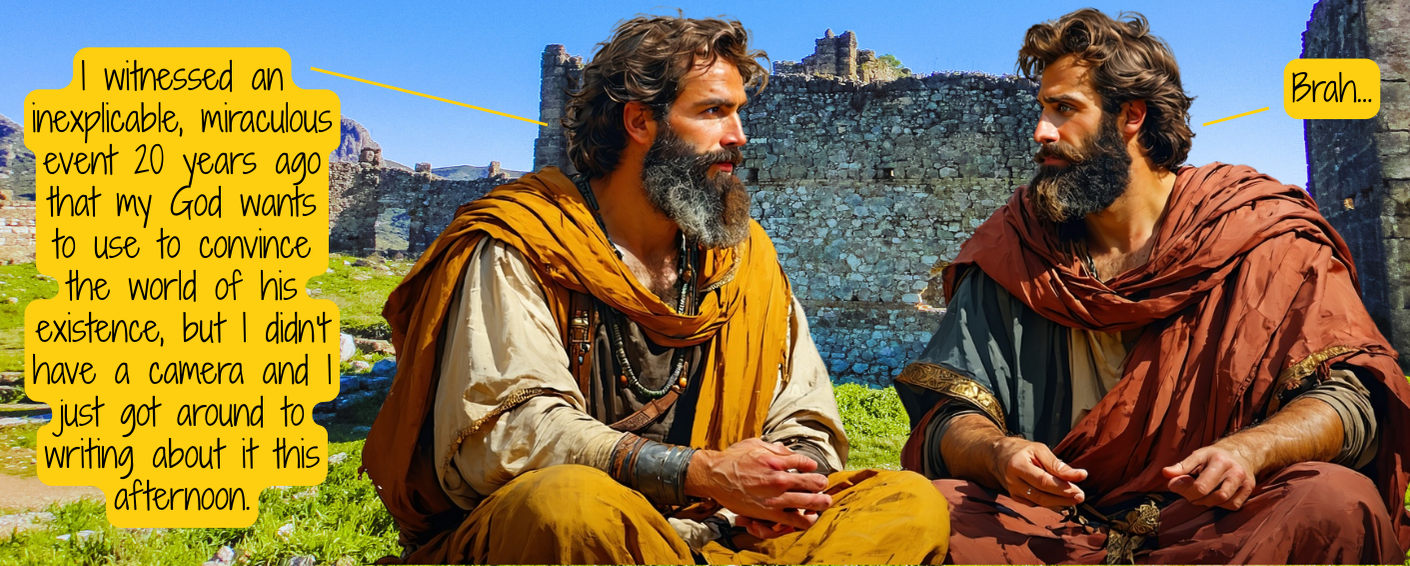
Summary: This analysis critically evaluates the resurrection of Jesus by first arguing inductively that the cumulative probability of natural explanations outweighs the plausibility of a supernatural event, emphasizing Bayesian reasoning and the role of unknown causes. It then deduces that the claim of Jesus paying the penalty for sin is logically inconsistent, as a finite three-day death cannot satisfy the requirement for eternal punishment, exposing theological contradictions.

Imagine being told that your neighbor’s dog has been dead for a month, only for the neighbor to later claim that the same dog has been resurrected. While this claim might be compelling if accompanied by alleged sightings or evidence of a living dog, your skepticism would persist. Why? Because resurrection, based on all our experiences and scientific knowledge, is far outside the realm of plausible events. This analogy highlights the extraordinary nature of the resurrection claim about Jesus. To accept such a claim as the “best explanation,” one must first rule out all naturalistic alternatives and grapple with the deductive inconsistencies embedded in the theology itself.
This essay systematically analyzes the inductive and deductive flaws in the resurrection argument. First, it evaluates the inductive reasoning via Bayesian principles, focusing on the cumulative probability of natural explanations. Then, it moves to the deductive contradictions within Christian theology, particularly the failure of Jesus’s death to satisfy the requirements for eternal punishment.

The Pinch
◉ ◉ ◉ The Inductive Index:
➘ https://www.academia.edu/143661037/_Bayesian_Pitfalls_in_Resurrection_Apologetics
➘ https://www.academia.edu/143772183/_Abduction_vs_Bayes_Competing_Frameworks_in_Resurrection_Apologetics
◉ ◉ ◉ The Deductive thumb:
➘ https://www.academia.edu/144330882/The_Valuation_Problem_in_Justice_Theory_Incommensurability_and_the_Categorical_Failure_of_PSA_35
Inductive Analysis: Why Natural Explanations are More Probable
1. Bayesian Epistemology and the Role of Unknown Causes
Extraordinary claims, such as the resurrection of Jesus, require extraordinary evidence. A core principle of Bayesian reasoning is that the prior probability of an event must guide our assessment of the evidence. For instance:
- The prior probability of a natural explanation (e.g., mistaken identity, fabrication) is relatively high because natural causes conform to the patterns observed in the world.
- The prior probability of a supernatural explanation (e.g., resurrection) is vanishingly low because it depends on phenomena that have never been observed or verified.
Furthermore, historical contexts often defaulted to supernatural explanations for unknown phenomena. Just as ancient people attributed lightning to divine wrath, claims of resurrection might stem from a lack of tools to understand psychological, social, or political motivations. In Bayesian terms, any modern analysis must include a large category of unknown natural causes, acknowledging the limits of our understanding without defaulting to the supernatural.
2. The Cumulative Probability of Alternative Explanations

Even if no single alternative explanation for the resurrection claim is definitive, the cumulative probability of natural explanations far outweighs that of a supernatural event. Consider the following naturalistic alternatives:
- Fabrication by Gospel Writers: Decades after Jesus’s death, his followers may have invented the resurrection narrative to align with Jewish messianic prophecies or bolster their movement. Fabrication is a common historical phenomenon and requires no supernatural elements.
- Mistaken Identity of the Tomb: In the chaos following Jesus’s crucifixion, followers may have mistakenly believed they had found an empty tomb when the body was elsewhere.
- Apparent Death Hypothesis: Jesus may not have died on the cross but instead entered a coma-like state, reviving later and being perceived as resurrected.
- Disciples’ Visions or Hallucinations: Psychological phenomena such as grief-induced visions or group hallucinations could explain post-crucifixion appearances. These experiences are well-documented in human history.
Each of these explanations, while not individually certain, adds to the cumulative weight of natural explanations. Bayesian analysis shows that the combined probability of these alternatives very likely surpasses the probability of a supernatural resurrection.
Inductive Flaw: Misusing Inference to the Best Explanation

Proponents of the resurrection often misuse inference to the best explanation, arguing that the resurrection best explains the evidence (e.g., the empty tomb and post-mortem appearances). However, this reasoning is flawed:
- Inference to the best explanation requires not just coherence but also plausibility grounded in prior knowledge.
- Supernatural claims, by definition, are less plausible than natural ones because they invoke unverified entities or forces.
This misuse distorts the inductive process. The resurrection may appear “best” only if one discounts alternative explanations or adopts theological assumptions. In reality, the epistemic conclusion should be that natural explanations are overwhelmingly more plausible, even if uncertainties remain.
— Related Article:

Deductive Analysis:
The Failed Substitution Argument
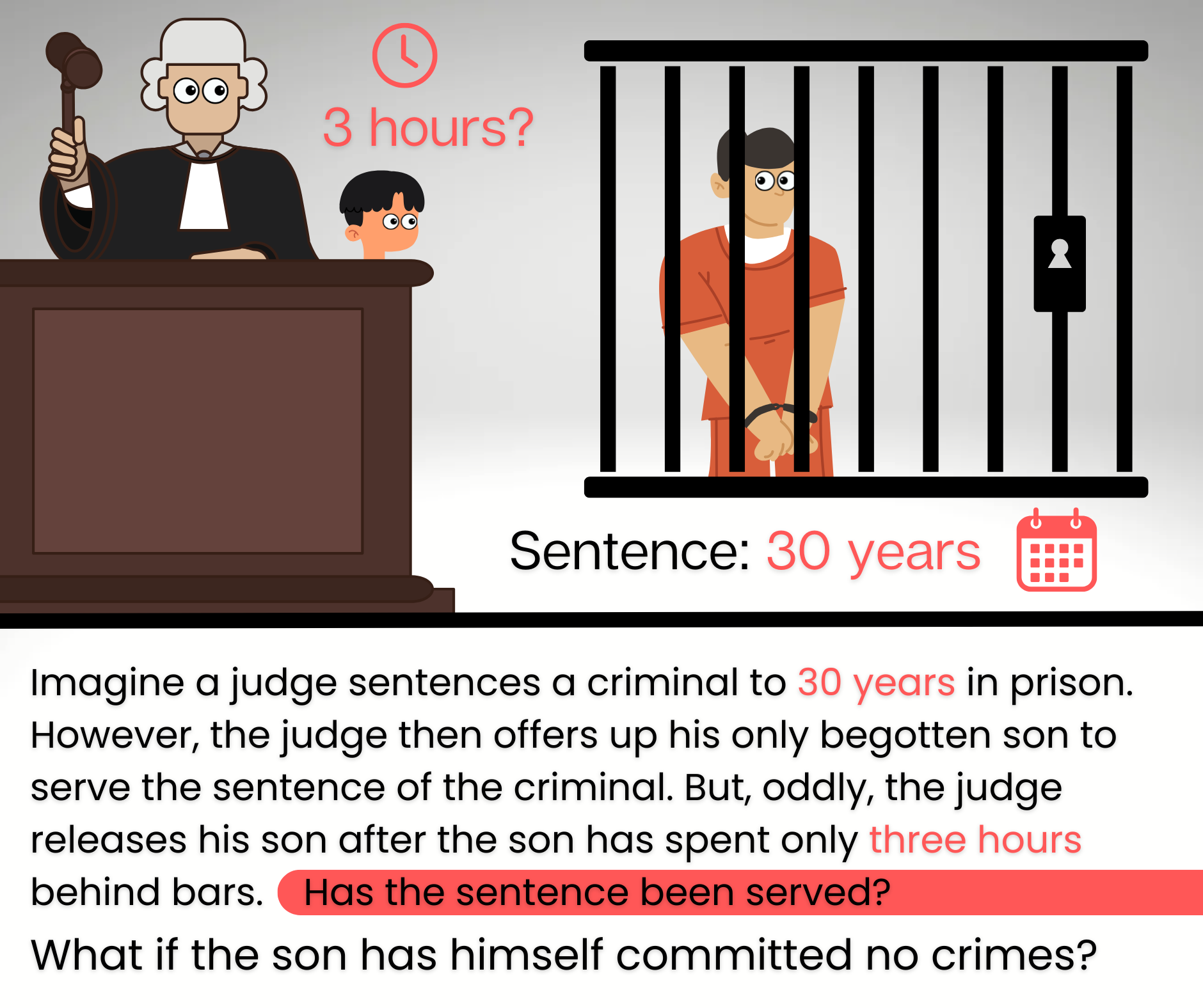
Symbolic logic reflecting the notions in the image
Click on the images below to view larger versions:

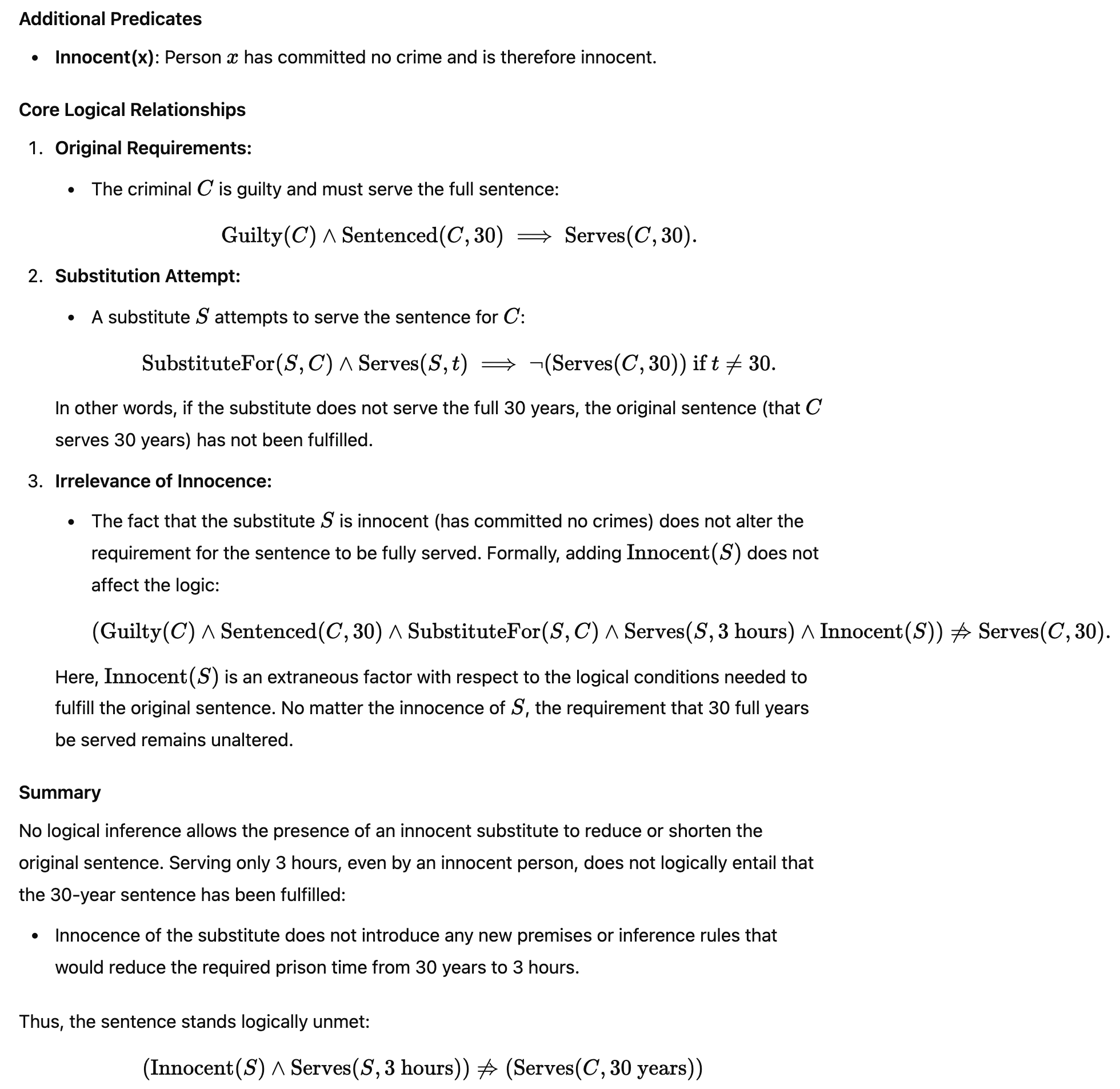
▲ Auxiliary Argument
1. The Logical Structure of the Argument
Theologically, Christians assert that Jesus’s death “paid the penalty for sin,” often described as eternal death or separation from God. However, this claim is logically inconsistent:
- Major Premise: Paying the penalty for sin requires suffering eternal death (infinite duration).
- Minor Premise: Jesus suffered death for three days, not eternally.
- Conclusion: Therefore, Jesus’s death did not pay the full penalty for sin.
In symbolic terms:
- Let
= Paying the penalty for sin,
= Suffering eternal death,
= Time Jesus suffered death (3 days),
= Time required for the penalty (eternity).
Thus:
- Premise 1:
,
- Premise 2:
(since
and
),
- Conclusion:
(Jesus did not pay the penalty).
This syllogism exposes a theological contradiction. If eternal punishment is the required penalty, a finite period of suffering—no matter how symbolic—fails to meet this standard.
2. The “Spherical Cube” Absurdity

The claim that Jesus fulfilled the penalty for sin is akin to saying, “I have a spherical cube of gold in my pocket.” While you might provide evidence of gold flakes as support, the logical impossibility of a “spherical cube” nullifies the claim. Similarly, the logical impossibility of equating 3 days of death with eternal punishment renders the substitution claim invalid.
Deductive Flaw: Theological Implications of the Resurrection
Beyond logical inconsistency, the resurrection introduces theological problems:
- If Jesus’s death was sufficient, why would believers need to endure the physical death deemed necessary only after the transgression of Adam and Eve?
- If Jesus’s sacrifice was symbolic, it undermines the notion of substitutionary atonement as a literal transaction.
These questions suggest that the resurrection narrative, far from resolving theological issues, creates new ones. This argument is expanded under the Notes > Clarifications section below.

Conclusion: Inductive and Deductive Failures of the Resurrection Hypothesis
The resurrection of Jesus fails on both inductive and deductive grounds:
- Inductively, the cumulative probability of natural explanations outweighs the plausibility of a supernatural event. Bayesian reasoning and historical context emphasize the role of unknown causes and the overreach of theological assumptions.
- Deductively, the claim that Jesus’s death paid the penalty for sin collapses under the “Failed Substitution” argument. A finite death cannot equate to infinite punishment, exposing a fatal flaw in Christian theology.
The resurrection, when analyzed critically, is neither the best explanation nor a consistent one. By invoking rigorous logic and Bayesian analysis, we can confidently reject the resurrection claim as implausible, favoring natural explanations that align with the evidence and reason.
A Relevant Technical Paper:
For an in-depth, more rigorous discussion of this issue, see the following article:
See also:

The Logical Form
Argument 1: The Implausibility of Supernatural Explanations Based on Bayesian Reasoning
- Premise 1: The prior probability of natural explanations (e.g., fabrication, mistaken identity, hallucinations) is high because they conform to observed patterns in the world.
- Premise 2: The prior probability of supernatural explanations (e.g., resurrection) is vanishingly low because they depend on unverified phenomena.
- Conclusion: Natural explanations are inherently more plausible than supernatural ones when evaluating historical claims like the resurrection.

Argument 2: The Cumulative Probability of Natural Explanations
- Premise 1: Alternative naturalistic explanations, such as fabrication, tomb misidentification, apparent death, and visions, each have a plausible basis in observed reality.
- Premise 2: Even if no single natural explanation is definitive, their combined probability outweighs that of a supernatural resurrection.
- Conclusion: The cumulative probability of natural explanations renders the resurrection hypothesis less plausible.
Argument 3: Misuse of Inference to the Best Explanation
- Premise 1: Inference to the best explanation requires both coherence with evidence and plausibility based on prior knowledge.
- Premise 2: Supernatural claims lack plausibility because they invoke unverified entities or phenomena.
- Conclusion: The resurrection cannot be considered the “best explanation” because it fails the plausibility requirement.
Argument 4: The Failed Substitution Argument (3 ≠ ∞)
- Premise 1: Paying the penalty for sin requires suffering eternal death (infinite duration).
- Premise 2: Jesus suffered death for three days, not eternally.
- Conclusion: Jesus’s death does not fulfill the penalty for sin as required by Christian theology.
Argument 5: The Logical Absurdity of the Resurrection Claim
- Premise 1: A finite death cannot logically equate to eternal punishment, as the timeframes are fundamentally incompatible.
- Premise 2: Claims equating three days of death with eternal punishment are analogous to asserting a “spherical cube”, which is logically incoherent.
- Conclusion: The resurrection claim is logically inconsistent and self-contradictory.
Argument 6: Theological Contradictions of the Resurrection
- Premise 1: If Jesus’s death fully paid for sin, ongoing sin and suffering in the world contradict the efficacy of this payment.
- Premise 2: If Jesus’s death was merely symbolic, it undermines the concept of substitutionary atonement as a literal transaction.
- Conclusion: The resurrection narrative creates unresolved theological contradictions instead of resolving doctrinal issues.

(Scan to view post on mobile devices.)

A Dialogue
Evaluating the Resurrection of Jesus
CHRIS: The resurrection of Jesus is the cornerstone of Christian faith. It is the best explanation for the evidence, such as the empty tomb, the appearances to the disciples, and the rapid growth of Christianity.
CLARUS: While I respect its centrality to your faith, the resurrection is far from the “best explanation.” Inference to the best explanation requires both coherence with evidence and plausibility grounded in prior knowledge. The prior probability of a supernatural event like resurrection is vanishingly low compared to natural explanations, which conform to observed patterns in reality.
CHRIS: But no natural explanation fully accounts for the evidence. Fabrication, mistaken identity, or hallucinations all have significant weaknesses. Doesn’t this make the resurrection the best explanation by elimination?
CLARUS: Not at all. The cumulative probability of natural explanations is what matters. Even if no single natural explanation is definitive, their combined likelihood outweighs the resurrection hypothesis. For example, consider fabrication by the Gospel authors, mistaken identity of the tomb, or visions caused by grief—all are more plausible than a violation of natural laws. Moreover, in cases where we lack a clear explanation, a responsible Bayesian approach includes a category of unknown causes, rather than defaulting to the supernatural.
CHRIS: But doesn’t the extraordinary nature of the resurrection itself make it stand out as a unique event, especially since the disciples were willing to die for their belief?
CLARUS: Not necessarily. Historical and psychological contexts explain why people can sincerely believe falsehoods, even at great personal cost. Grief-induced visions or hallucinations, coupled with social and political motivations, provide naturalistic alternatives. More importantly, the prior improbability of supernatural events undermines their explanatory power, no matter how compelling the narrative.
CHRIS: Let’s turn to theology, then. Jesus’s death paid the penalty for humanity’s sin, offering eternal salvation. Surely this theological consistency strengthens the case for the resurrection.
CLARUS: The theological argument is riddled with logical contradictions. For example, if the penalty for sin is eternal death, how can three days of death satisfy an infinite punishment? This issue is captured in the “Failed Substitution Argument”:
- Paying the penalty for sin requires eternal death.
- Jesus only suffered death for three days.
- Therefore, his death does not fulfill the penalty for sin.
This is like claiming to own a spherical cube of gold. The logical incoherence invalidates the claim, no matter how much gold is presented.
CHRIS: But the three days of death were symbolic, showing that Jesus conquered death itself.
CLARUS: If the three days are merely symbolic, then the substitutionary atonement collapses as a literal transaction. A symbolic payment for an eternal punishment fails to resolve the problem of sin. Worse, if Jesus truly “conquered death,” why do sin and suffering persist? These unresolved contradictions weaken, rather than strengthen, the resurrection claim.
CHRIS: Aren’t you being overly skeptical? The evidence we have—the empty tomb and eyewitness accounts—should carry significant weight.
CLARUS: Skepticism is warranted when extraordinary claims are made. The evidence you mention is weak by historical standards, and even if it were stronger, natural explanations would still be more probable. Invoking the resurrection as the “best explanation” only works if one ignores the Bayesian improbability of supernatural events, the logical inconsistency of finite punishment substituting for eternity, and the cumulative plausibility of natural alternatives.
CHRIS: So, you’re saying that no matter how much evidence there is, you’ll never accept the resurrection?
CLARUS: That’s not what I’m saying. I’d accept the resurrection if there were overwhelming and independent evidence, coupled with a plausible mechanism for suspending natural laws. But the current case fails both inductively—because natural alternatives are far more plausible—and deductively—because the theology of substitutionary atonement contradicts itself. Until these issues are resolved, skepticism remains the most rational stance.
CHRIS: I’ll need to think more about this. You’ve given me a lot to consider.
CLARUS: That’s all I ask. Engaging with these issues critically is the first step toward understanding the weaknesses in the argument for the resurrection. Let’s continue this dialogue when you’ve had time to reflect.

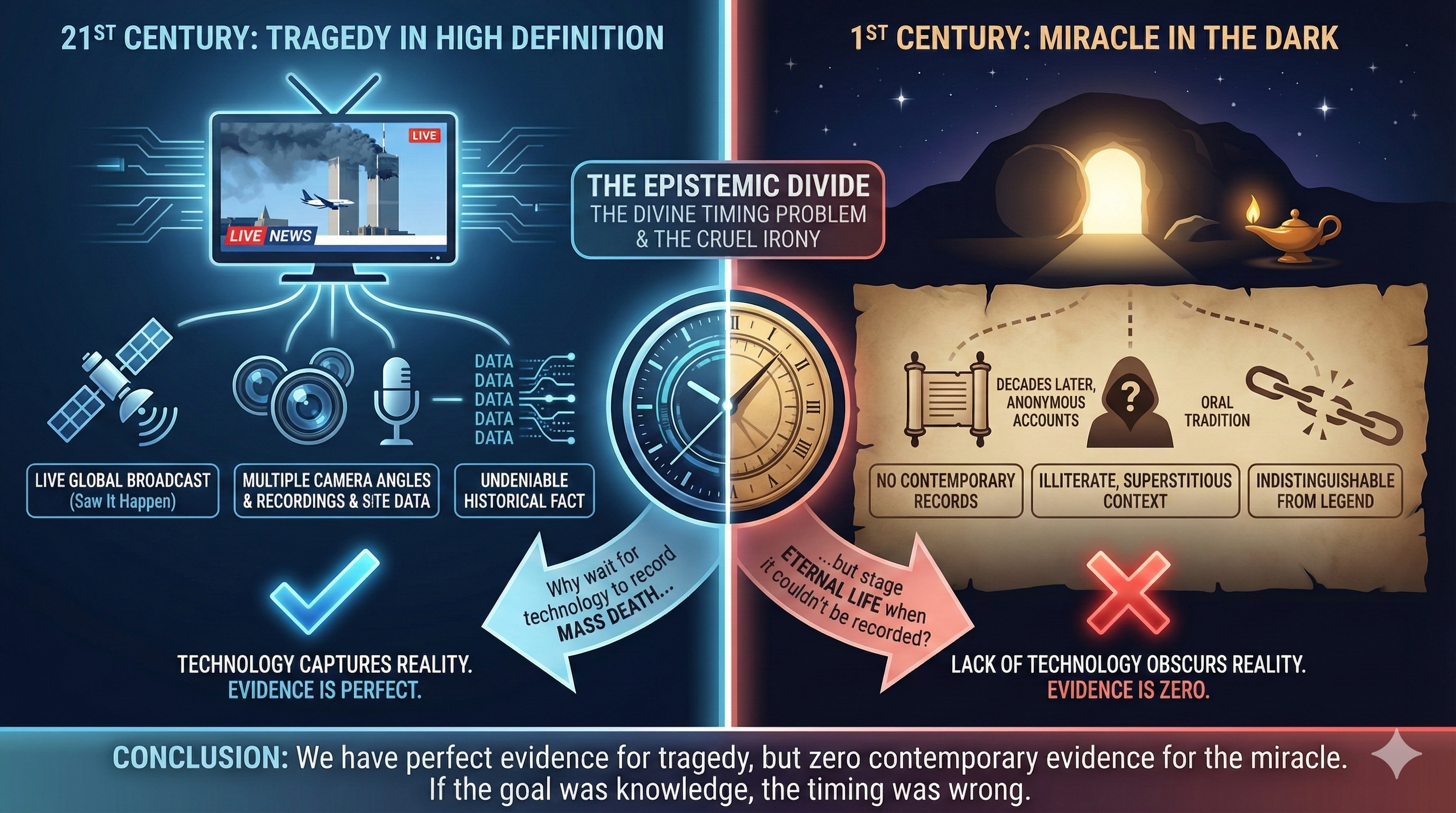
Notes:
Helpful Analogies
Analogy 1: The Spherical Cube
Imagine someone claiming to own a spherical cube made of gold. They might present evidence of gold flakes, suggesting the presence of gold, but the logical impossibility of a “spherical cube” invalidates the claim. Similarly, the claim that three days of death satisfies the penalty of eternal punishment is inherently self-contradictory. No matter how much secondary evidence is offered (e.g., empty tomb or appearances), the core concept collapses under logical scrutiny.
Analogy 2: Lightning and Supernatural Assumptions

In ancient times, lightning was often attributed to the anger of gods due to the lack of scientific tools to explain it. This reliance on supernatural explanations stemmed from ignorance, not evidence. In the same way, invoking resurrection as the explanation for events surrounding Jesus arises from a default to the supernatural, bypassing more plausible natural causes like fabrication, mistaken identity, or hallucinations. Just as lightning was eventually understood through natural processes, the resurrection claim should be examined with a broader allowance for unknown natural causes.
Analogy 3: The Resurrected Dog
Suppose your neighbor tells you their dog has been dead for a month but has now resurrected. Even if you observe what appears to be the same dog alive, you would seek alternative explanations: a mistaken identity, a fabricated story, or even a misunderstanding of the dog’s initial state. Accepting resurrection would require extraordinary evidence because it contradicts all biological and natural laws. Similarly, the claim of Jesus’s resurrection faces the same uphill battle, where alternative explanations are far more plausible than a violation of natural law.
Addressing Theological Responses
Theological Responses
1. Response: The Resurrection’s Supernatural Nature Makes It Unique
Theologians may argue that the resurrection is a unique event specifically intended to demonstrate God’s power over death and cannot be evaluated solely by naturalistic methods. They might claim that Bayesian reasoning and natural probabilities do not apply to miracles because miracles, by definition, exist outside of natural laws and probabilities. As such, the resurrection should be assessed within the theological framework, not through empirical skepticism.
2. Response: The Symbolism Complements the Literal Sacrifice
Theologians could counter the “Failed Substitution Argument” by asserting that Jesus’s death was both literal and symbolic, fulfilling the requirements for atonement. They might argue that the three days of death, while finite, serve as a profound act of divine mercy, representing a substitution that is valid because it is performed by an infinite being (God). Hence, the quality of Jesus’s divinity compensates for the lack of infinite duration in his death.
3. Response: The Disciples’ Transformation Supports the Resurrection
Theologians might emphasize the dramatic transformation of Jesus’s disciples after his death. They often highlight that the disciples went from fearful individuals to bold preachers who were willing to die for their belief in the resurrection. This, they argue, suggests that they genuinely believed Jesus had risen, and such belief would not have arisen from fabrication or hallucinations.
4. Response: Alternative Explanations Lack Comprehensive Power
Theologians may claim that naturalistic alternatives—such as hallucinations, mistaken identity, or fabrication—fail to fully account for all the evidence, including the empty tomb, post-mortem appearances, and the rapid spread of Christianity. They argue that the resurrection hypothesis provides a more comprehensive explanation of the data, even if it involves supernatural elements.
5. Response: The Resurrection Resolves Theological Questions
A theological response might assert that the resurrection resolves questions about sin, death, and humanity’s relationship with God. They could argue that Jesus’s atonement is not a mere transactional substitution but a cosmic event that transcends finite human understanding. Therefore, they might dismiss logical contradictions, such as “3 ≠ ∞,” as human limitations in comprehending divine actions.
6. Response: Historical and Eyewitness Accounts Add Credibility
Theologians might contend that the eyewitness testimony found in the Gospels and other early Christian writings provides compelling historical evidence for the resurrection. They might assert that the accounts of the empty tomb, coupled with multiple post-resurrection appearances, offer credible support that should not be easily dismissed as fabrication or error.
7. Response: Faith Transcends Rationality
Finally, theologians may argue that the resurrection cannot be entirely proven or disproven through logic or evidence because it is fundamentally an act of faith. They might claim that the transformative power of the resurrection is best understood experientially, through the life changes it brings to believers, rather than through purely intellectual arguments.
Counter-Responses
1. Response to “The Resurrection’s Supernatural Nature Makes It Unique”
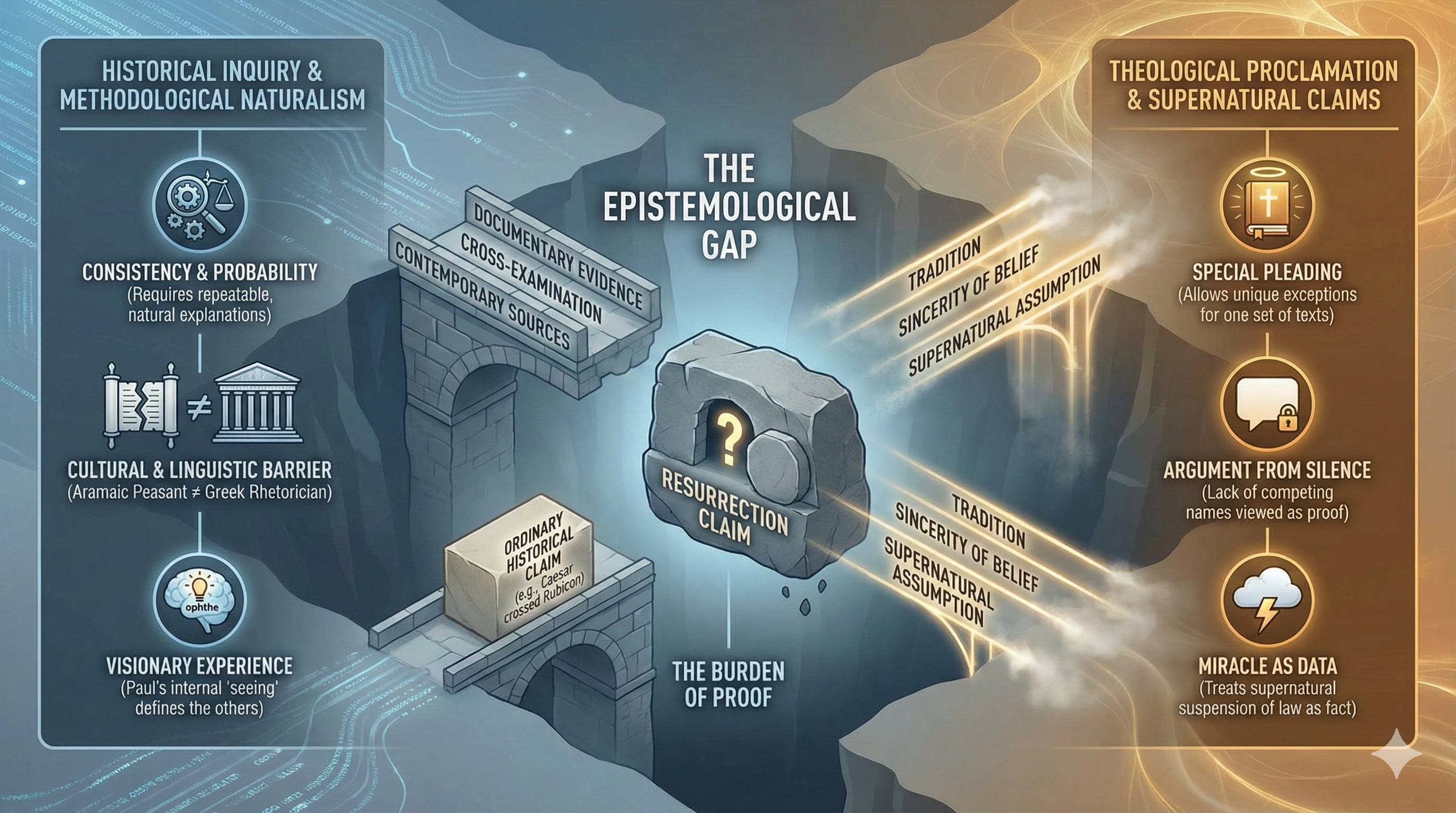
While theologians argue that miracles exist outside natural laws and probabilities, this position undermines their claim that the resurrection is a historical event. Historical claims must be evaluated with consistent epistemological standards, which rely on evidence and probability. Invoking the supernatural to exempt the resurrection from scrutiny creates a category immune to falsification, making the claim unverifiable. Moreover, attributing uniqueness to an event does not justify ignoring its improbability; uniqueness alone cannot serve as evidence of occurrence.
2. Response to “The Symbolism Complements the Literal Sacrifice”
The argument that divinity compensates for the finite duration of Jesus’s death introduces an ad hoc theological assertion without basis in logic or evidence. If the penalty for sin is eternal death, then the condition is one of duration, not quality. An infinite being suffering for three days does not logically equate to eternal punishment. Additionally, the combination of literal substitution and symbolism introduces ambiguity that weakens the coherence of the atonement doctrine.
3. Response to “The Disciples’ Transformation Supports the Resurrection”
While the disciples’ transformation is notable, it does not necessarily indicate the truth of the resurrection. Sincere belief in an event does not establish its occurrence; humans are capable of sincerely believing falsehoods, as seen in cults or other religious movements. Alternative explanations, such as grief-induced visions, groupthink, or psychological transformation, are more plausible than a literal resurrection because they do not require violations of natural laws.
4. Response to “Alternative Explanations Lack Comprehensive Power”
The claim that the resurrection offers the most comprehensive explanation of the evidence assumes that comprehensiveness outweighs plausibility. While the resurrection may seem to account for all the evidence, its reliance on supernatural elements renders it far less probable than the cumulative probability of natural explanations. Furthermore, each natural alternative—such as fabrication, mistaken identity, or hallucinations—addresses specific parts of the evidence without invoking unverified phenomena.
5. Response to “The Resurrection Resolves Theological Questions”
While the resurrection may offer a theologically satisfying resolution, this does not make it true. Theological coherence is not equivalent to historical or logical validity. Moreover, the “Failed Substitution Argument” directly challenges the theological claim that Jesus’s finite death pays for an infinite penalty. Simply appealing to human limitations in understanding divine actions avoids addressing the fundamental logical contradictions within the doctrine.
6. Response to “Historical and Eyewitness Accounts Add Credibility”
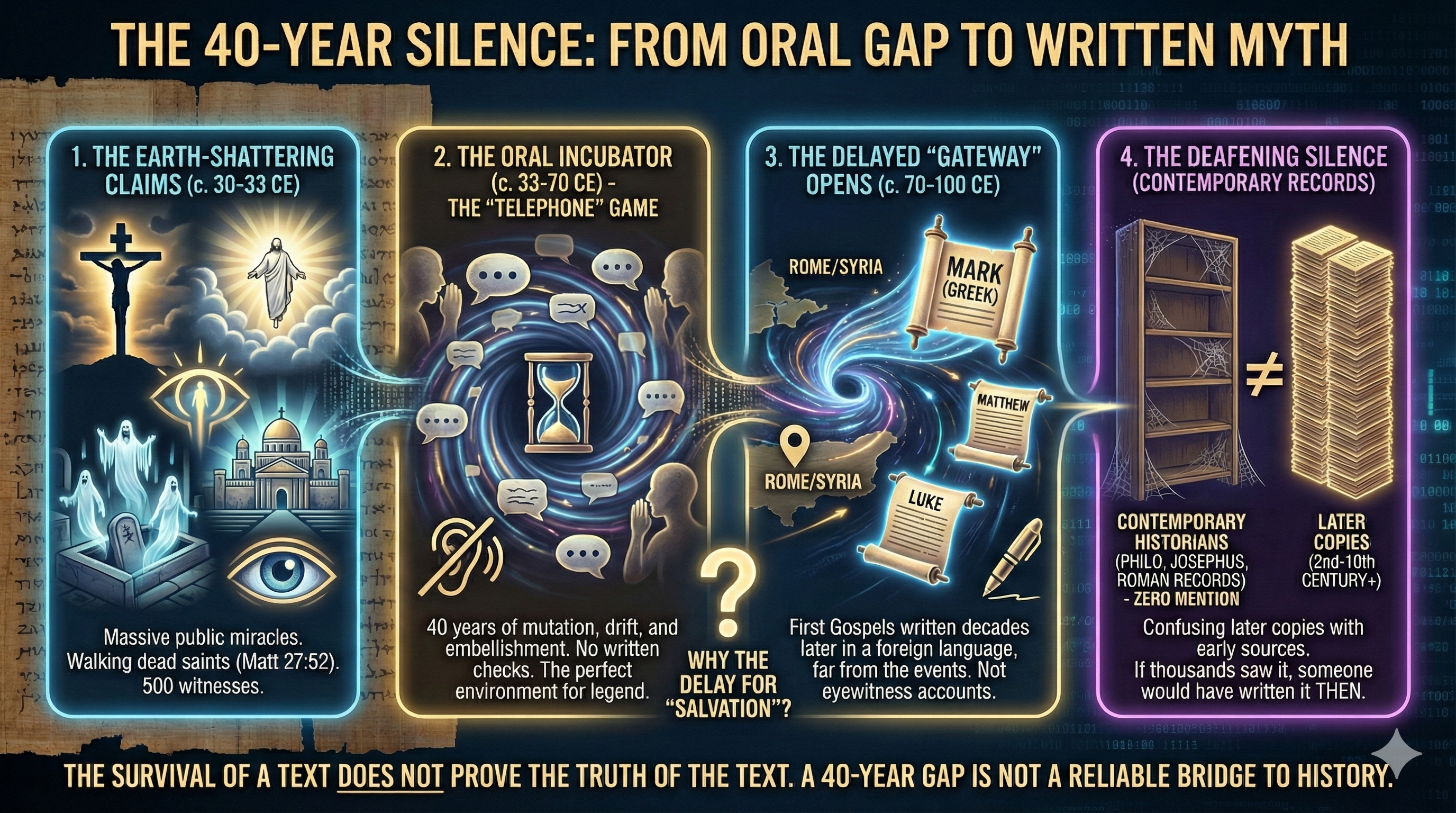
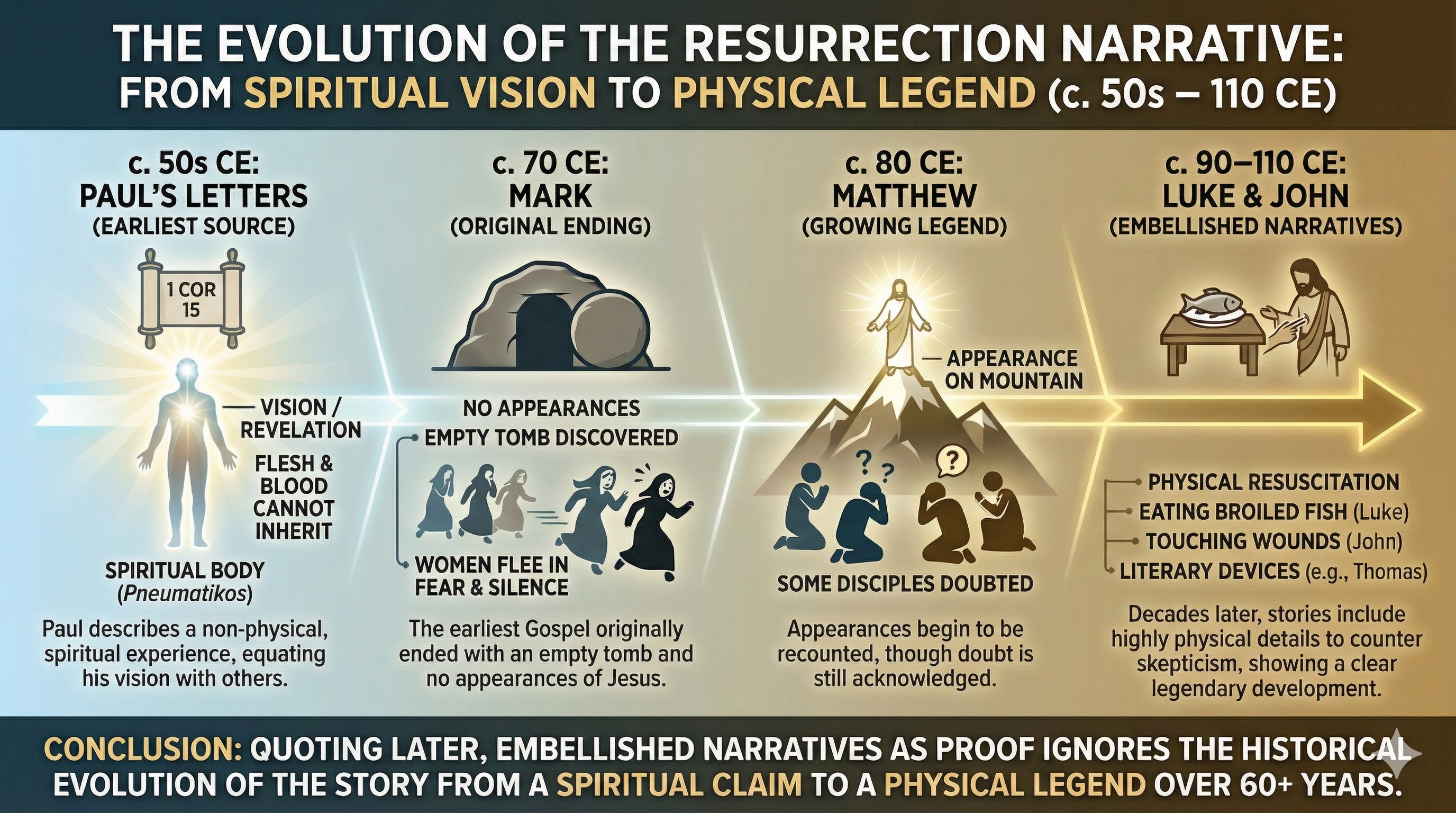
The Gospels and other early Christian writings are not independent eyewitness accounts but theologically motivated texts written decades after the events they describe. These accounts lack corroboration from neutral or contemporary sources, which significantly weakens their historical reliability. Moreover, human susceptibility to memory errors, mythmaking, and theological embellishment makes such texts insufficient to establish a supernatural event like resurrection.
7. Response to “Faith Transcends Rationality”
The argument that faith transcends rationality admits that the resurrection cannot be defended through evidence or logic, effectively conceding the debate on rational grounds. While faith may have personal value for believers, it is not a reliable epistemological tool for evaluating historical claims. Relying on faith to defend the resurrection places it in the realm of subjective belief rather than objective truth, where it cannot be meaningfully discussed or debated.
Clarifications
Did Jesus Actually Pay the Penalty for Sin?
- The Penalty for Sin Requires Eternal Death:
Christian theology asserts that the penalty for sin is eternal punishment, often interpreted as eternal separation from God. This is represented as an infinite duration of suffering. - Jesus’s Death Lasted Three Days:
Jesus is said to have died and remained dead for three days before being resurrected, constituting a finite duration of suffering. - Three Days of Death Was Declared Sufficient to Pay for Sin:
If Jesus’s resurrection demonstrates that three days of death satisfies the penalty for sin, then this establishes a precedent: a finite duration of death (three days) is sufficient atonement for sin. - Humans Also Experience Death:
Humans die and often remain dead for at least three days or longer. Therefore, if three days of death satisfies the penalty, all humans would logically fulfill the requirement for their own sins after three days of death. - Eternal and Finite Durations Are Not Equivalent:
If eternal punishment (infinite duration) is indeed the required penalty for sin, a finite death—whether of Jesus or any human—cannot logically fulfill this requirement. In mathematical terms,.
Conclusions (Two Mutually Exclusive Outcomes)
- Jesus’s Death Was Insufficient to Pay the Penalty for Sin:
If eternal punishment is the true penalty for sin, then Jesus’s finite suffering of three days does not fulfill the requirement. This conclusion undermines the doctrine of substitutionary atonement and challenges the theological basis of the resurrection. - All Humans Pay for Their Own Sins After Three Days of Death:
If three days of death is sufficient to satisfy the penalty for sin (as demonstrated by Jesus’s resurrection), then all humans would logically pay for their own sins by remaining dead for at least three days. This conclusion renders Jesus’s death unnecessary for atonement and contradicts the exclusivity of his sacrifice.
Symbolic Logic Representation
- Let
Paying the penalty for sin.
- Let
Suffering eternal punishment (infinite duration).
- Let
Time Jesus suffered in death (
days).
- Let
Time required to pay for sin (
).
- Let
Time humans spend in death (finite duration,
days).
Premises:
(Humans also die and remain dead for at least three days).
Conclusions:
- If
- If
, then all humans pay for their own sins after three days of death, making Jesus’s sacrifice unnecessary.
Recap
If Jesus’s resurrection demonstrates that three days of death satisfies the penalty for sin, then the precedent is set that a finite duration of death (three days) is sufficient for atonement. Since most humans die and remain dead for at least three days, they would logically pay for their own sins through their own deaths. This outcome negates the necessity of Jesus’s sacrifice for atonement. Alternatively, if eternal punishment (infinite duration) is indeed the required penalty, then Jesus’s three-day death cannot fulfill this requirement, and the substitutionary atonement doctrine fails. These mutually exclusive conclusions expose a fundamental inconsistency: either Jesus’s death was insufficient, or human deaths are themselves sufficient to pay the penalty for sin after three days.
An Attempted Refutation
The Comment:
I find the point that supernatural events have a low probability to be a problematic premise. I’ve seen quite a few people try to argue this way, and it’s just a really strange way to approach the supernatural. When we think of a naturalistic event, we think of something happening “naturally”, meaning, all on its own. This is quite different from something like a decision. For example, we wouldn’t talk about the naturalistic probability of something making a decision. It’s perfectly natural (rather than supernatural), and I suppose you “could” try to force probability onto it, but realistically, it’s the person’s choice. Yes, you could say there are low odds of someone choosing mushrooms if you have prior knowledge of them hating mushrooms, but still, most real free choices aren’t really about “probability” in the same way that naturalistic events are.
A supernatural event isn’t similar to a naturalistic event, and is far more like a decision from a free agent. When we talk about a supernatural event, we’re not saying “it just happened to be this way”. We’re saying that some free agent, which is outside of our naturalistic observations, made a decision to act. To treat this supernatural free agent’s decision-making process within a probability evaluation seems like a category mistake.
The explicit counters given against the resurrection are very thoroughly dealt with, and some wouldn’t even be respected by secular historians and scientists (for example, the apparent death hypothesis, see the AMA journal article on what causes death in crucifixion).
The point about the son taking the penalty is an excellent question, and really gets to the foundation of what the Gospel is about. A major element to this doctrine is the necessity of the incarnation. Jesus didn’t become human just to relate to us, or hang out with us. He entered into humanity, because humanity was guilty. Jesus literally became guilty with us. He also became our head, or representative, having authority over us (if we submit to Him). So, He is able to take on the responsibility, because He is in charge of humanity. All analogies fail, but a good analogy for this is a manager of a company being responsible for what happens in the business.
For the eternal death point, this is another very good point that gets to the foundation of the Gospel. Humanity has committed an eternal sin, because it’s against God. We are literally incapable of paying the price. As an example, if a bug bites my child, and my child dies, no amount of wrath is capable of being poured out onto that bug, because it’s not the kind of thing that can take responsibility for the intensely negative consequence it has brought about (again, all analogies fail, but you get the point I’m trying to make). So, since we are incapable of paying the price in quality, instead, we pay it in quantity. This is why hell is eternal. Imagine for a moment someone owed so much money, that the interest raking up was even too much for the person to pay. So, even theoretically, even if a literal infinite amount of time passed, the person couldn’t pay it off. That’s the situation humanity is in. However, God is of infinite value, and is capable of paying the price.
For the last point about why physical death (not spiritual death) still occurs for the believer, I recommend checking out the eschatological point of “already but not yet”.
Good things to consider though, thanks.
Assessment of the Comment in Relation to the Content
The comment consists of multiple points challenging the content’s argument against the resurrection. Below, I extract each distinct point, assess its relevance, logical coherence, and success at defeating the argument in the content.
◉ Point 1: The claim that supernatural events have a low probability is a problematic premise.
1) Relevance:
- This point is directly relevant to the content, as the content’s Bayesian argument hinges on assigning a low prior probability to supernatural claims, including resurrection.
2) Logical Coherence:
- The commenter argues that supernatural events should not be evaluated probabilistically, comparing them to free decisions rather than naturalistic occurrences.
- However, Bayesian analysis is not limited to deterministic systems. It applies to any claim, including human decisions, as long as they have observable consequences.
- The analogy to a person’s choice is a category error, as decisions (even if free) are still modeled probabilistically based on prior information. The fact that supernatural events are not observed in any reliable dataset makes assigning a low probability reasonable.
3) Success at Defeating the Argument:
- Fails. The objection misunderstands probability theory, which applies even to volitional actions when outcomes are observed. Bayesian reasoning does not assume naturalism a priori, but updates belief based on evidence—which overwhelmingly favors natural causes.
◉ Point 2: A supernatural event is like a free decision rather than a natural occurrence, making probability assessments a category mistake.
1) Relevance:
- Relevant, as it directly challenges the Bayesian analysis used in the content.
2) Logical Coherence:
- The claim that “free agent decisions” should not be subject to probability is incorrect. Decisions are still constrained by prior conditions and predictable tendencies.
- For instance, the probability of a person choosing chocolate over vanilla can be estimated if past preferences are known.
- Additionally, the commenter assumes the existence of a supernatural free agent, which begs the question rather than refuting the Bayesian critique.
3) Success at Defeating the Argument:
- Fails. Even if the resurrection were framed as a free decision by a supernatural agent, probability theory would still apply to whether this explanation is more likely than naturalistic alternatives.
◉ Point 3: The explicit counters to the resurrection (e.g., the apparent death hypothesis) are thoroughly refuted by secular scholars and medical literature.
1) Relevance:
- Relevant, since the content discusses naturalistic alternatives to resurrection, including the apparent death hypothesis.
2) Logical Coherence:
- The claim that secular scholars and medical journals reject the apparent death hypothesis is unclear without citation.
- While most scholars reject this theory, this does not invalidate Bayesian analysis, which assesses the cumulative probability of all natural alternatives—not just one.
- Even if the apparent death hypothesis were weak, the content lists multiple independent alternatives (fabrication, mistaken tomb identity, hallucinations), meaning this objection does not affect the overall argument.
3) Success at Defeating the Argument:
- Fails. Refuting one alternative does not eliminate the cumulative probability argument, which rests on the combined weight of all natural explanations.
◉ Point 4: The substitutionary atonement argument is addressed through Jesus’s authority as the head of humanity.
1) Relevance:
- Relevant, as the content critiques the theological coherence of Jesus’s death satisfying eternal punishment.
2) Logical Coherence:
- The comment does not refute the logical contradiction (i.e., three finite days ≠ eternity).
- The claim that Jesus “became guilty with humanity” does not address the fundamental issue that finite suffering is not equivalent to eternal punishment.
- The analogy to a manager taking responsibility is weak, as it does not explain why a finite payment equates to an infinite debt.
3) Success at Defeating the Argument:
- Fails. The core objection remains: if eternal punishment is required, then a finite death is logically insufficient to fulfill it.
◉ Point 5: Eternal sin justifies eternal punishment, similar to an infinitely accruing debt.
1) Relevance:
- Relevant, as it attempts to explain why Jesus’s finite suffering could satisfy an eternal penalty.
2) Logical Coherence:
- The analogy of eternally accumulating debt is incoherent because debt accrues based on external factors (e.g., interest rates), whereas punishment should logically correspond to the severity of the action.
- The bug-bite analogy is also flawed. The issue is not whether punishment should be infinite, but whether a finite payment (Jesus’s death) satisfies an infinite punishment.
- The analogy misses the point and does not engage with the content’s logical argument that finite suffering cannot equate to infinite punishment.
3) Success at Defeating the Argument:
- Fails. The response does not resolve the contradiction—it simply asserts a theological rationale without engaging the logical problem.
◉ Point 6: The “already but not yet” eschatology explains why believers still face physical death.
1) Relevance:
- Relevant, since the content questions why believers still physically die if Jesus “paid the penalty.”
2) Logical Coherence:
- The “already but not yet” doctrine is a theological assertion, not a logical resolution.
- The problem remains: If Jesus fully paid the penalty, why would any additional suffering or death be required at all?
- The comment does not resolve this tension, only reframes it as a mystery.
3) Success at Defeating the Argument:
- Fails. The explanation does not logically counter the claim that continued human suffering contradicts the idea that Jesus’s sacrifice was fully sufficient.
— Conclusion: Overall Assessment of the Comment
| Point | Relevance | Logical Coherence | Success |
|---|---|---|---|
| Supernatural events shouldn’t be assigned low probability. | Relevant | Category error in probability theory | Fails |
| Supernatural events are more like decisions than natural occurrences. | Relevant | Category mistake; Bayesian theory still applies | Fails |
| The apparent death hypothesis is not respected by scholars. | Relevant | Does not refute Bayesian cumulative argument | Fails |
| Jesus’s role as humanity’s representative justifies substitutionary atonement. | Relevant | Fails to address finite vs. infinite contradiction | Fails |
| Eternal sin justifies eternal punishment. | Relevant | Incoherent analogy; does not resolve finite vs. infinite contradiction | Fails |
| Eschatology explains why believers still physically die. | Relevant | Theological assertion, not a logical resolution | Fails |
— Final Verdict:
- While the comment is largely relevant, its arguments fail due to logical errors, category mistakes, and unaddressed contradictions.
- The content’s Bayesian and logical critiques remain intact, as the comment does not sufficiently challenge the fundamental premises.


 Free of Faith
Leave a comment