
◉ How a Single Deceitful Doctor Created 553 Miracles
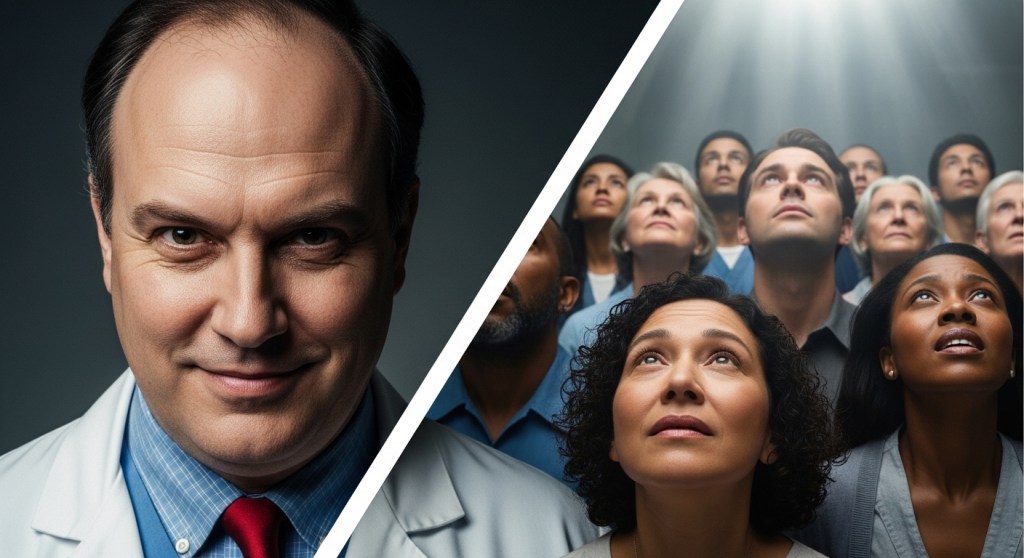
The case of Dr. Farid Fata—convicted for fabricating cancer diagnoses and administering unnecessary chemotherapy to 553 patients—exposes a disturbing vulnerability in human reasoning: our tendency to accept extraordinary explanations when a mundane one is available. The facts are straightforward. Fata, a respected oncologist, wielded the authority of his profession to tell hundreds of people they had cancer when they did not. In doing so, he not only committed one of the most egregious acts of medical fraud in U.S. history, but also, quite unintentionally, “created” hundreds of potential miracle stories for religious communities.
Once the diagnosis was given, the patients and their families entered into an emotional landscape dominated by fear, urgency, and heightened meaning-seeking. These conditions are fertile ground for cognitive biases. The belief that one has cancer is not simply a medical fact—it becomes a central narrative around which life decisions, emotional states, and social interactions orbit. In many religious contexts, this narrative quickly incorporates prayer, appeals to divine mercy, and community reinforcement that “God can heal.”
When a later medical assessment declares the patient cancer-free—whether due to seeking a second opinion, ending treatment after the doctor’s arrest, or simply completing the fraudulent regimen—the believer’s mind faces a choice between explanations:
- The doctor lied or was wrong — an explanation grounded in human fallibility, requiring no supernatural intervention.
- God healed me — an explanation that affirms religious beliefs, provides emotional uplift, and reinforces the notion of personal divine favor.
From a probabilistic standpoint, the first explanation is vastly more likely. Yet many believers gravitate toward the second. Why?
◉ Cognitive Mechanisms at Play
✓ Confirmation Bias – Once the possibility of divine healing is entertained, believers tend to notice and remember facts that support it while discounting evidence for human error. The initial diagnosis is rarely scrutinized with the same vigor as the perceived healing.
✓ Authority Bias – Because the diagnosis came from a respected medical professional, patients treat it as a near-certainty. This inflates the improbability of recovery in their minds, making divine intervention seem necessary.
✓ Emotional Reasoning – High emotional stakes narrow the field of acceptable explanations. “God healed me” feels more comforting than “I was lied to,” especially when the latter carries anger, betrayal, and the realization of avoidable suffering.
✓ Community Reinforcement – In many religious circles, testimonies of healing are celebrated and retold. This social validation both rewards the supernatural interpretation and discourages skepticism.
✓ Agency Detection Bias – Humans are predisposed to see intentional agency behind significant events. A sudden recovery is viewed not as a natural occurrence, but as the deliberate act of a caring divine being.
✓ Identity Protection Cognition – Accepting that a beloved miracle story is rooted in fraud threatens a believer’s worldview. It is cognitively safer to preserve the theological narrative than to confront the collapse of trust in both a doctor and a belief system.
◉ From Fraud to Faith Story
When these cognitive tendencies converge, the path from false diagnosis to “miracle” is nearly inevitable:
- A trusted authority declares terminal illness.
- The diagnosis integrates into a religious framework of suffering, prayer, and hope.
- Recovery occurs, not because of divine action, but because there was no disease to begin with.
- Believers interpret the change as divine healing, and the story spreads through faith communities as evidence of God’s power.
The result? Hundreds of testimonies, each sincerely told, each anchored in an utterly false premise. The same act of deception that destroyed lives becomes, perversely, a source of spiritual encouragement for others.
◉ The Epistemic Lesson
The Dr. Fata case is not merely about greed and medical betrayal; it is a cautionary tale about the fragility of human reasoning when emotion, authority, and community incentives align. Without rigorous verification of a diagnosis, “miracle healings” cannot be meaningfully distinguished from cases where the illness never existed. The mind’s preference for affirming beliefs over revising them in light of unpleasant truths ensures that the least probable explanation—divine intervention—often emerges as the most embraced.
Thus, one deceitful doctor could “create” 553 miracles, not by curing cancer, but by fabricating it. In doing so, he demonstrates how easily human cognition can convert deliberate falsehood into a pillar of faith. The tragedy is that the victims, robbed of health, money, and trust, may be left with a story that comforts others while obscuring the crime that made it possible.


Leave a Reply