
◉ The Indwelling Spirit: A Test of Claim vs. Observable Reality
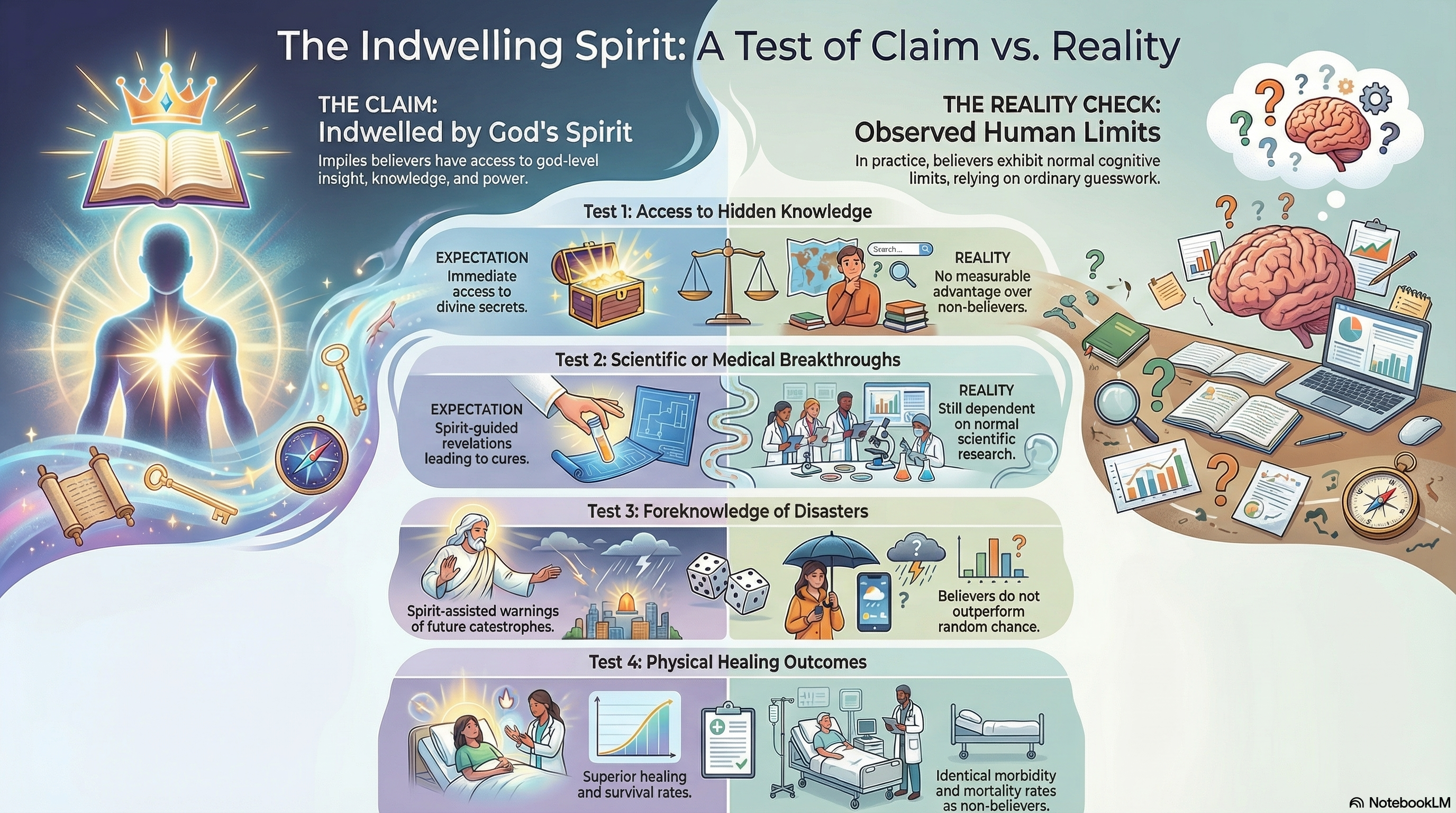
For many Christians, one of the most cherished doctrines is the belief that the Holy Spirit literally indwells believers. This indwelling is often described as a transformative infusion of divine power—providing insight, wisdom, strength, guidance, and even access to truths beyond normal human capacity. In sermons and testimonies, this claim is presented as a defining feature of Christian identity.
But when we move from assertions to measurable outcomes, a consistent pattern emerges: the promised supernatural advantages never materialize in any domain where they should be detectable. Across knowledge, healing, foresight, and innovation, believers exhibit the same cognitive, physical, and predictive limitations as anyone else.
This article examines four key areas where divine indwelling should produce unmistakable results—but does not.
1. Hidden Knowledge: The Expected vs. the Observable

Christian teaching frequently implies that those with the Spirit have access to guidance beyond natural reasoning. Believers often speak of discernment, revelation, spiritual insight, or divine wisdom.
Expectation:
- Immediate access to divine secrets
- Spirit-inspired clarity on complex decisions
- Unique cognitive advantages
Observable Reality:
- Believers demonstrate the same cognitive biases, errors, and uncertainties as non-believers.
- No study has ever shown statistically superior performance from believers in problem-solving, intuition, or predictive accuracy.
- Believers disagree with each other as frequently—and as intensely—as everyone else.
If the Spirit truly provided superior insight, we would expect believers to show above-average outcomes in fields requiring deep understanding. Instead, their performance matches ordinary human patterns.
2. Scientific and Medical Breakthroughs: Spirit-Guided Innovation?
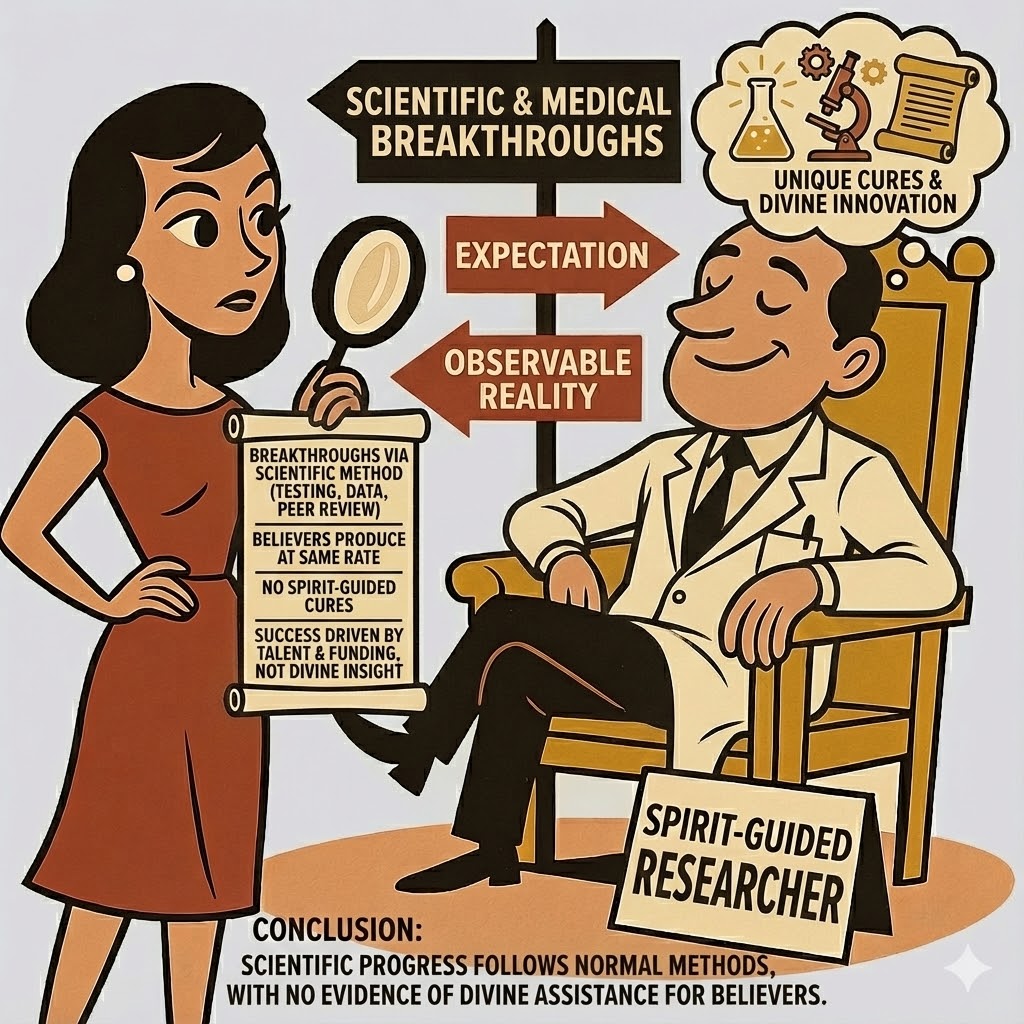
The claim that God indwells Christians suggests a potential conduit for groundbreaking discoveries—especially in medicine, where compassion and human suffering intersect.
Expectation:
- Spirit-guided breakthroughs
- Unique access to solutions or cures
- Innovative discoveries emerging from Spirit-filled researchers
Observable Reality:
- Breakthroughs arise from the normal scientific method: testing, data, peer review.
- Believers do not produce scientific advances at rates that reflect divine assistance.
- No medical cures trace to revelation or Spirit-guided knowledge.
Believing scientists succeed or fail at the same rate as non-believing scientists. Talent, training, collaboration, funding, and data—not divine insight—drive discovery.
3. Foreknowledge of Disasters: An Expected Domain for Divine Warning
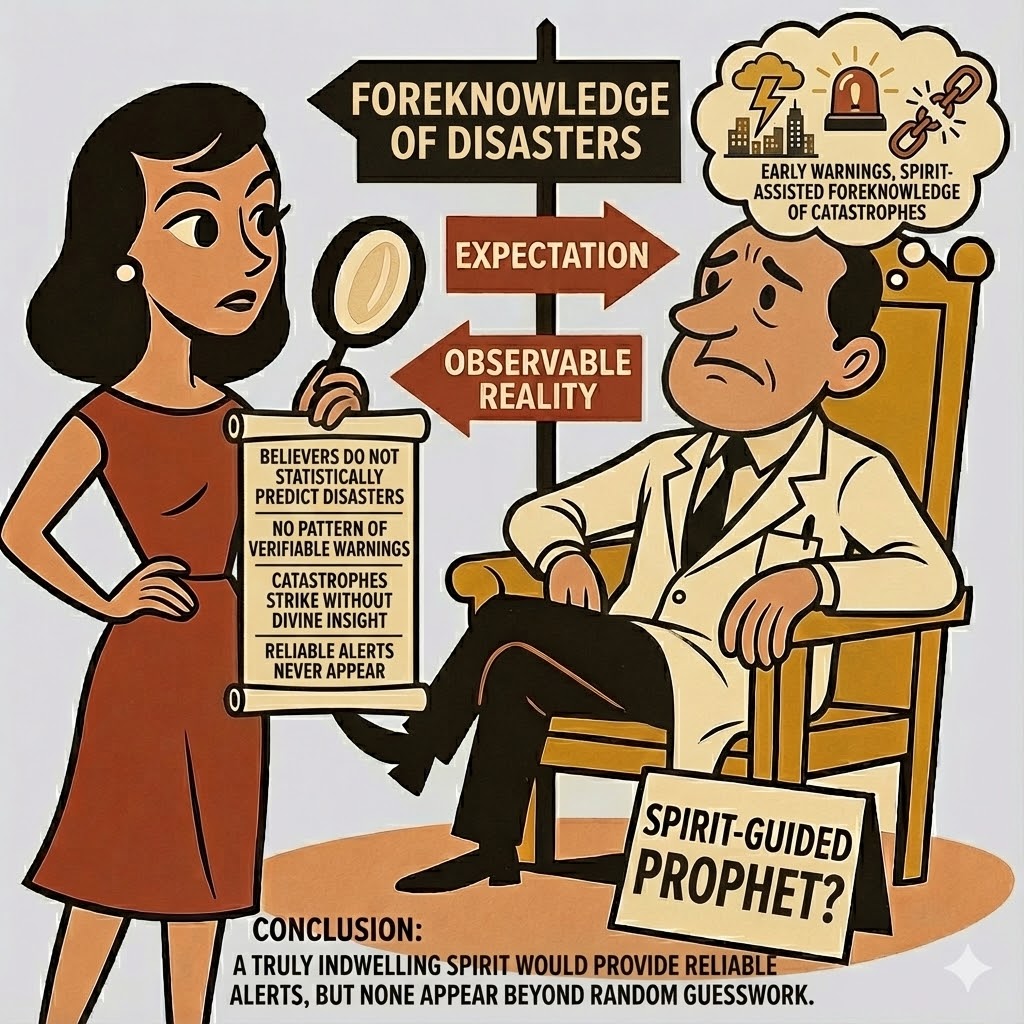
If a supernatural being indwells individuals and cares deeply about humanity, warnings about danger would be a reasonable expected outcome.
Expectation:
- Spirit-assisted foreknowledge of catastrophes
- Early warnings about disasters, crises, or threats
- Believers outperforming chance in predictions
Observable Reality:
- Believers do not statistically predict disasters with accuracy beyond random guesswork.
- No pattern of verifiable supernatural warnings emerges across history.
- Catastrophes strike communities—including Christian ones—without advance divine insight.
A truly indwelling, all-knowing Spirit would provide reliable alerts. Yet those alerts never appear.
4. Healing and Survival Outcomes: Divine Power Measured in Human Bodies
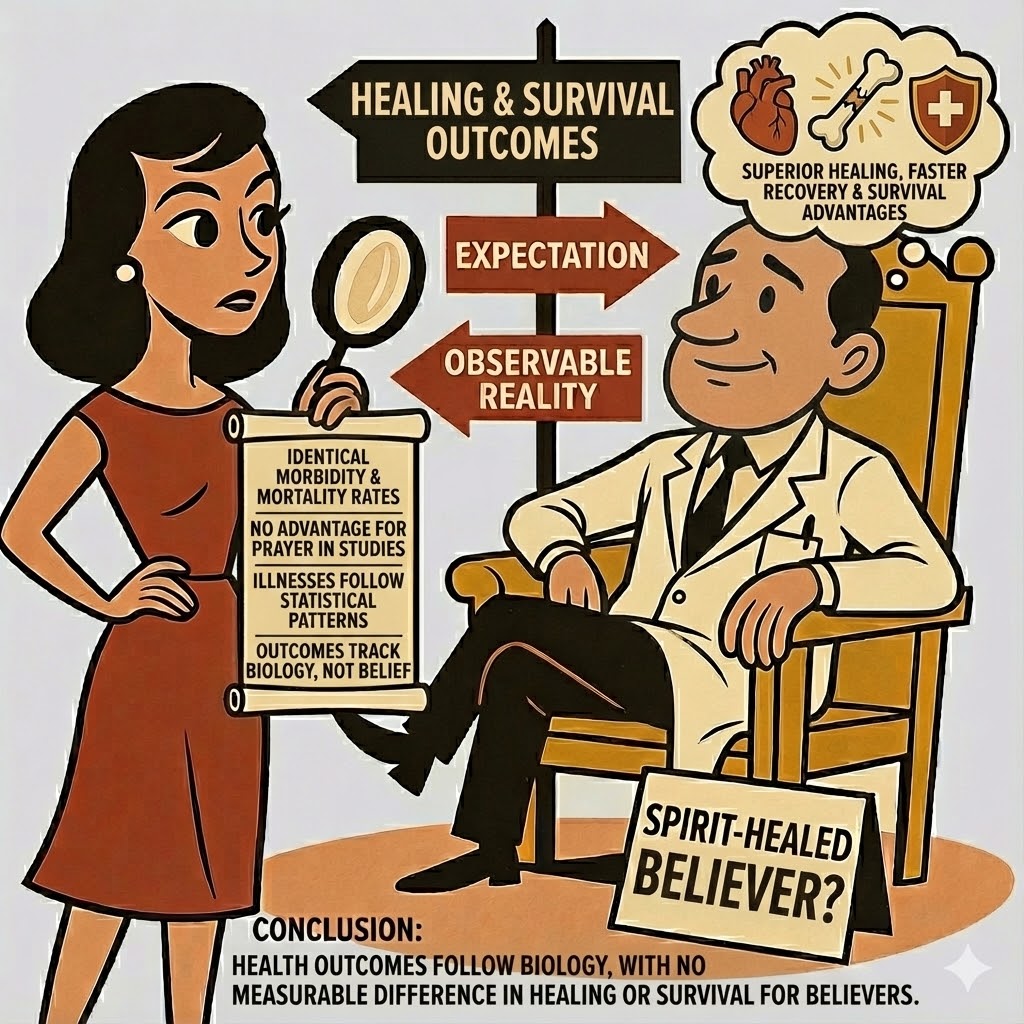
If God dwells within believers, one might expect measurable differences in physical outcomes—faster recovery, greater resilience, lower mortality, or improved survival rates.
Expectation:
- Superior healing outcomes
- Noticeably better recovery trajectories
- Distinct survival advantages
Observable Reality:
- Believers experience identical morbidity and mortality rates as non-believers.
- Controlled studies show no advantage for prayer or divine healing.
- Major illnesses, chronic conditions, and injuries follow the same statistical patterns regardless of faith.
Hospitals do not see believers walking out with supernatural speed. Health outcomes track biology, not belief.
THE CONSISTENT PATTERN:
Extraordinary Claims, Ordinary Outcomes
Across all four domains, the expected effects of divine indwelling fail to appear. The results align perfectly with what we would expect if believers are simply ordinary humans relying on ordinary cognition, ordinary research, and ordinary biology.
This is not a critique of sincerity. It is an evaluation of outcomes.
If a claim predicts extraordinary advantages—and those advantages never manifest—the rational response is to scrutinize the claim rather than bend reality to protect the expectation.
The doctrine of the indwelling Spirit carries weighty implications. If those implications never produce observable effects, the doctrine deserves examination—especially by those who value truth over tradition.
Examination is not hostility.
Scrutiny is not contempt.
Asking a claim to match its predictions is simply part of honest inquiry.


 Free of Faith
Leave a comment